
Skin & hair

Skin & hair

Updated on

Updated on

Feb 27, 2026

Feb 27, 2026

Oral Minoxidil vs. Topical Minoxidil for Male Pattern Hair Loss

A head-to-head randomized clinical trial compared low-dose oral minoxidil to the standard 5% topical solution and here's what the numbers actually showed.

Table of Contents

Table of Contents

  • What Is Male Pattern Hair Loss?

  • What Is Minoxidil and How Does It Work?

  • Effectiveness of Minoxidil

    • Visible Improvement at the Crown

    • Hair Density Results

  • Side Effects of Minoxidil

  • FAQ's

  • Check Your Eligibility

  • What Is Male Pattern Hair Loss?

  • What Is Minoxidil and How Does It Work?

  • Effectiveness of Minoxidil

    • Visible Improvement at the Crown

    • Hair Density Results

  • Side Effects of Minoxidil

  • FAQ's

  • Check Your Eligibility

Male pattern hair loss can be tough to treat, and topical medications can be a real pain, literally, in some cases. Now, new research indicates there may be another option to talk to your doctor about.

A head-to-head randomized clinical trial tested a once-daily oral minoxidil tablet against the standard 5% topical minoxidil solution in men with male pattern hair loss. At 24 weeks, both treatments significantly boosted hair growth. The results however were not identical, and neither were the side effects.

What Is Male Pattern Hair Loss?

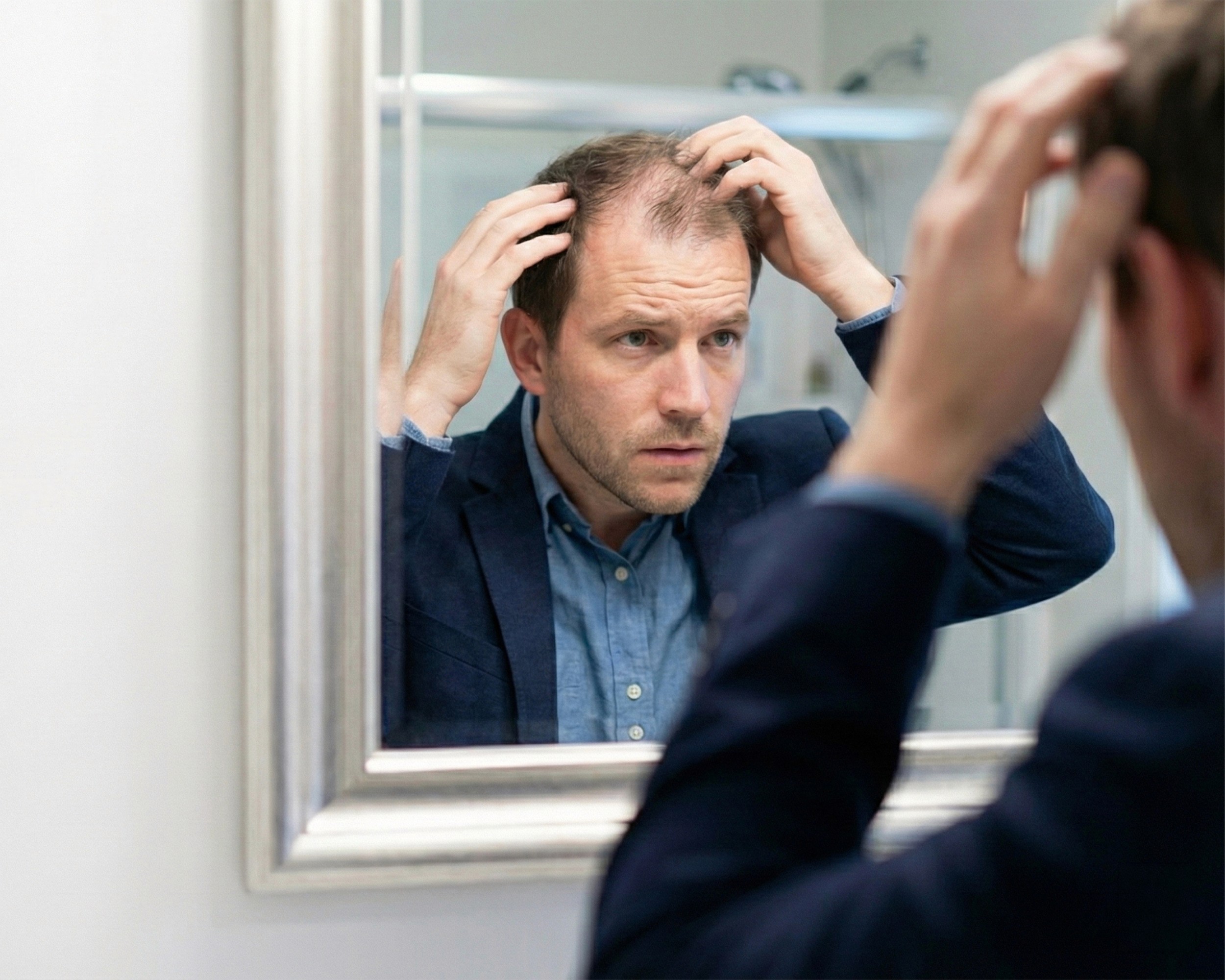
Male pattern baldness, also known as androgenic alopecia, is a form of hair loss where you permanently lose the hair on your scalp, experience hair thinning, and a receding hairline that gradually moves further back on your head. It happens in 2 out of 3 men, and the risk of hair loss grows as you age. Around 25% of men show signs of hair loss before age 21, 50% experience hair loss by age 50, and roughly 70% of men lose hair as they age.

The disease is caused by a mix of age, hormones, and genetics. It’s believed that an androgen called dihydrotestosterone (DHT) is associated with hair follicles slowly shrinking over time. When your hair follicles shrink, your hair becomes thinner and shorter, until it stops growing entirely. This often presents in a particular way, with hair loss starting around the crown of the head, and a receding hairline, which often takes on an “M” or “U” shape.

Male pattern baldness isn’t a danger to your physical health, but it can impact you psychosocially and psychologically. Some men experience emotional distress, anxiety, and depression. Keep in mind, without medication or treatment, hair loss from male pattern baldness is almost irreversible, which is one reason why consistent, long-term treatment seems to be so important.

What Is Minoxidil and How Does It Work?

Minoxidil is used to stimulate hair growth in adults with a certain type of baldness. It is available in two forms: a topical solution or foam applied directly to the scalp, and a low-dose oral tablet taken by mouth. Because topical minoxidil is applied locally, its effects are concentrated at the scalp. Oral minoxidil enters the bloodstream and affects the body systemically, which has implications for both its effectiveness and its side effect profile, as the trial results below illustrate.

There are a few important things to understand about how minoxidil behaves over time. If hair growth is going to occur, it usually happens after the medicine has been used for several months, and it lasts only as long as the medicine continues to be used. Hair loss will begin again within a few months after minoxidil treatment is stopped.

It's also worth knowing that studies have shown the medicine works best in younger patients who have a short history of hair loss. Your provider can help you understand whether minoxidil may be appropriate given your specific situation and how far along your hair loss has progressed.

Effectiveness of Minoxidil

Visible Improvement at the Crown

Of the men using oral minoxidil, around 70% achieved clinical improvement in hair growth at the crown, compared to around 46% of those using the topical foam.

Hair Density Results

When the researchers looked at how many of the hairs in the treatment areas were fully grown thicker strands, the two treatments came out roughly equal. That suggests that the visible difference in effect came down to the new hair growth, rather than just a wide disparity in how many new hairs actually came in.

One possible explanation for the difference in visible regrowth is how each form reaches the hair follicles. Topical minoxidil has to be absorbed through the scalp, and getting consistent, even coverage across the treatment area can be tricky. Oral minoxidil travels through the bloodstream, reaching follicles from the inside out. That more uniform delivery may help explain why the oral form showed a greater visible impact at the crown, though adherence likely plays a role too, as a once-daily pill can simply be easier to use consistently than a topical application.

Side Effects of Minoxidil

Both treatments had side effects, they just looked different.

The rates were much different for men who experienced unwanted body or facial hair. This side effect affected roughly 49% of men who used oral minoxidil and roughly 25% of men who used topical minoxidil. As we mentioned above, topical minoxidil has a local effect on the scalp. Systemic minoxidil (in the form of an oral pill) affects your entire body. Since the oral pill didn’t have a localized effect it increased hair growth in places that might not have been wanted.

On the other hand, irritation and rash of the scalp were noted primarily in topical patients, which is not surprising given that alcohol is the base for most topical preparations.

Neither side effect is universally better, individual factors like skin sensitivity, lifestyle, and other personal preferences may influence which compromise you may prefer. It is important to discuss with your provider which one is more suitable for you.

FAQ's

Is the unwanted hair growth from oral minoxidil permanent?

Once you stop taking it, yes. But the degree and distribution of hair growth differs from person to person. Consider this when talking to your practitioner.

How long before I'd see results?

This study measured outcomes at the 24-week mark. The hair growth process is generally slow, and many practitioners recommend using a treatment for at least six months before determining whether it’s working.

What about minoxidil + finasteride combinations?

Some doctors may recommend a combination treatment for patients who haven’t seen results with just one of the medications. But that’s a decision best left up to the doctor, and only after a comprehensive visit.

In a simplified explanation, minoxidil essentially increases hair growth while finasteride helps slow down hair loss. Therefore depending on how much hair loss has occurred the combination may or may not be recommended.

Where can I get minoxidil?

Topical minoxidil is available over the counter at most pharmacies. Oral minoxidil requires a prescription from a healthcare provider. If you're interested in exploring whether oral or topical minoxidil is right for your situation, a provider on Mochi Health's telehealth platform can evaluate your needs and discuss your options.

Check Your Eligibility

If you’re struggling with continued hair loss or have had issues adhering to topical medications, a practitioner may discuss other treatments like minoxidil (oral or topical) and combination therapies with you, depending on your personal needs.

A healthcare provider on Mochi Health’s telehealth platform can help you determine the best course of action for your needs. Check your eligibility here.


Disclaimer: This article is for educational purposes only and should not be considered medical advice. The information provided does not constitute recommendations for treatment. Always consult with your healthcare provider about your specific situation, symptoms, and treatment options.


References

Male Pattern Baldness (Androgenic Alopecia): Stages, Treatment.” Cleveland Clinic, 9 Dec. 2022, http://my.clevelandclinic.org/health/diseases/24515-male-pattern-baldness-androgenic-alopecia

Minoxidil (Topical Route) Description and Brand Names.” Mayo Clinic, 1 Feb. 2026, http://www.mayoclinic.org/drugs-supplements/minoxidil-topical-route/description/drg-20068750

Minoxidil Topical Solution or Foam.” Cleveland Clinic, 2026, http://my.clevelandclinic.org/health/drugs/18238-minoxidil-topical-solution-or-foam

Penha, Mariana Alvares, et al. "Oral Minoxidil vs Topical Minoxidil for Male Androgenetic Alopecia: A Randomized Clinical Trial." JAMA Dermatology, vol. 160, no. 6, 2024, pp. 600-06. PubMed, https://pubmed.ncbi.nlm.nih.gov/38598226/

Male pattern hair loss can be tough to treat, and topical medications can be a real pain, literally, in some cases. Now, new research indicates there may be another option to talk to your doctor about.

A head-to-head randomized clinical trial tested a once-daily oral minoxidil tablet against the standard 5% topical minoxidil solution in men with male pattern hair loss. At 24 weeks, both treatments significantly boosted hair growth. The results however were not identical, and neither were the side effects.

What Is Male Pattern Hair Loss?

Male pattern baldness, also known as androgenic alopecia, is a form of hair loss where you permanently lose the hair on your scalp, experience hair thinning, and a receding hairline that gradually moves further back on your head. It happens in 2 out of 3 men, and the risk of hair loss grows as you age. Around 25% of men show signs of hair loss before age 21, 50% experience hair loss by age 50, and roughly 70% of men lose hair as they age.

The disease is caused by a mix of age, hormones, and genetics. It’s believed that an androgen called dihydrotestosterone (DHT) is associated with hair follicles slowly shrinking over time. When your hair follicles shrink, your hair becomes thinner and shorter, until it stops growing entirely. This often presents in a particular way, with hair loss starting around the crown of the head, and a receding hairline, which often takes on an “M” or “U” shape.

Male pattern baldness isn’t a danger to your physical health, but it can impact you psychosocially and psychologically. Some men experience emotional distress, anxiety, and depression. Keep in mind, without medication or treatment, hair loss from male pattern baldness is almost irreversible, which is one reason why consistent, long-term treatment seems to be so important.

What Is Minoxidil and How Does It Work?

Minoxidil is used to stimulate hair growth in adults with a certain type of baldness. It is available in two forms: a topical solution or foam applied directly to the scalp, and a low-dose oral tablet taken by mouth. Because topical minoxidil is applied locally, its effects are concentrated at the scalp. Oral minoxidil enters the bloodstream and affects the body systemically, which has implications for both its effectiveness and its side effect profile, as the trial results below illustrate.

There are a few important things to understand about how minoxidil behaves over time. If hair growth is going to occur, it usually happens after the medicine has been used for several months, and it lasts only as long as the medicine continues to be used. Hair loss will begin again within a few months after minoxidil treatment is stopped.

It's also worth knowing that studies have shown the medicine works best in younger patients who have a short history of hair loss. Your provider can help you understand whether minoxidil may be appropriate given your specific situation and how far along your hair loss has progressed.

Effectiveness of Minoxidil

Visible Improvement at the Crown

Of the men using oral minoxidil, around 70% achieved clinical improvement in hair growth at the crown, compared to around 46% of those using the topical foam.

Hair Density Results

When the researchers looked at how many of the hairs in the treatment areas were fully grown thicker strands, the two treatments came out roughly equal. That suggests that the visible difference in effect came down to the new hair growth, rather than just a wide disparity in how many new hairs actually came in.

One possible explanation for the difference in visible regrowth is how each form reaches the hair follicles. Topical minoxidil has to be absorbed through the scalp, and getting consistent, even coverage across the treatment area can be tricky. Oral minoxidil travels through the bloodstream, reaching follicles from the inside out. That more uniform delivery may help explain why the oral form showed a greater visible impact at the crown, though adherence likely plays a role too, as a once-daily pill can simply be easier to use consistently than a topical application.

Side Effects of Minoxidil

Both treatments had side effects, they just looked different.

The rates were much different for men who experienced unwanted body or facial hair. This side effect affected roughly 49% of men who used oral minoxidil and roughly 25% of men who used topical minoxidil. As we mentioned above, topical minoxidil has a local effect on the scalp. Systemic minoxidil (in the form of an oral pill) affects your entire body. Since the oral pill didn’t have a localized effect it increased hair growth in places that might not have been wanted.

On the other hand, irritation and rash of the scalp were noted primarily in topical patients, which is not surprising given that alcohol is the base for most topical preparations.

Neither side effect is universally better, individual factors like skin sensitivity, lifestyle, and other personal preferences may influence which compromise you may prefer. It is important to discuss with your provider which one is more suitable for you.

FAQ's

Is the unwanted hair growth from oral minoxidil permanent?

Once you stop taking it, yes. But the degree and distribution of hair growth differs from person to person. Consider this when talking to your practitioner.

How long before I'd see results?

This study measured outcomes at the 24-week mark. The hair growth process is generally slow, and many practitioners recommend using a treatment for at least six months before determining whether it’s working.

What about minoxidil + finasteride combinations?

Some doctors may recommend a combination treatment for patients who haven’t seen results with just one of the medications. But that’s a decision best left up to the doctor, and only after a comprehensive visit.

In a simplified explanation, minoxidil essentially increases hair growth while finasteride helps slow down hair loss. Therefore depending on how much hair loss has occurred the combination may or may not be recommended.

Where can I get minoxidil?

Topical minoxidil is available over the counter at most pharmacies. Oral minoxidil requires a prescription from a healthcare provider. If you're interested in exploring whether oral or topical minoxidil is right for your situation, a provider on Mochi Health's telehealth platform can evaluate your needs and discuss your options.

Check Your Eligibility

If you’re struggling with continued hair loss or have had issues adhering to topical medications, a practitioner may discuss other treatments like minoxidil (oral or topical) and combination therapies with you, depending on your personal needs.

A healthcare provider on Mochi Health’s telehealth platform can help you determine the best course of action for your needs. Check your eligibility here.


Disclaimer: This article is for educational purposes only and should not be considered medical advice. The information provided does not constitute recommendations for treatment. Always consult with your healthcare provider about your specific situation, symptoms, and treatment options.


References

Male Pattern Baldness (Androgenic Alopecia): Stages, Treatment.” Cleveland Clinic, 9 Dec. 2022, http://my.clevelandclinic.org/health/diseases/24515-male-pattern-baldness-androgenic-alopecia

Minoxidil (Topical Route) Description and Brand Names.” Mayo Clinic, 1 Feb. 2026, http://www.mayoclinic.org/drugs-supplements/minoxidil-topical-route/description/drg-20068750

Minoxidil Topical Solution or Foam.” Cleveland Clinic, 2026, http://my.clevelandclinic.org/health/drugs/18238-minoxidil-topical-solution-or-foam

Penha, Mariana Alvares, et al. "Oral Minoxidil vs Topical Minoxidil for Male Androgenetic Alopecia: A Randomized Clinical Trial." JAMA Dermatology, vol. 160, no. 6, 2024, pp. 600-06. PubMed, https://pubmed.ncbi.nlm.nih.gov/38598226/

Read next

Feb 2, 2026

How Mochi is Building a Provider Network That Puts Patients First

Jan 26, 2026

How Mochi is Transforming Medication Access

Dec 9, 2025

GLP-1s for Pre-diabetes: Can You Prevent Type II Diabetes?

Dec 2, 2025

The Stigma Problem: Why Patients on GLP-1s Don't Owe Anyone an Explanation

Nov 21, 2025

Which Additive is Best for You? GLP-1 Additives Explained: B12, L-Carnitine, and More

Nov 20, 2025

The Link Between GLP-1s and Inflammation: CRP, Cytokines, and Immune Effects

Nov 19, 2025

CagriSema: The New GLP 1 and Amylin Combination That May Transform Obesity Treatment

Nov 19, 2025

GLP 1s and Cardiometabolic Health: How These Medications Support the Heart and Long Term Wellness

Nov 18, 2025

Why Protein Intake Matters on GLP-1 Medications and How Much You Really Need

Nov 17, 2025

Mochi NAD+: Understanding How This Essential Molecule Supports Energy, Cellular Health, and Longevity

Nov 16, 2025

Mochi Menopause: Expert Menopause Care with Estradiol Pills, Progesterone, and Hormone Creams

Oct 31, 2025

What is GLP-1 Microdosing & How Does it Work?

Ready to transform your health?

Unlock access to expert guidance and a weight care plan crafted just for you.

Ready to transform your health?

Unlock access to expert guidance and a weight care plan crafted just for you.

Ready to transform your health?

Unlock access to expert guidance and a weight care plan crafted just for you.

Personalized care designed for you.

© 2026 Mochi Health

All professional medical services are provided by licensed physicians and clinicians affiliated with independently owned and operated professional practices. Mochi Health Corp. provides administrative and technology services to affiliated medical practices it supports, and does not provide any professional medical services itself.

Personalized care designed for you.

© 2026 Mochi Health

All professional medical services are provided by licensed physicians and clinicians affiliated with independently owned and operated professional practices. Mochi Health Corp. provides administrative and technology services to affiliated medical practices it supports, and does not provide any professional medical services itself.

Personalized care designed for you.

© 2026 Mochi Health

All professional medical services are provided by licensed physicians and clinicians affiliated with independently owned and operated professional practices. Mochi Health Corp. provides administrative and technology services to affiliated medical practices it supports, and does not provide any professional medical services itself.