All articles
GHK-Cu: Benefits, Side Effects & How It Works
Reading time:
6 min

Skincare

Get expert guidance and a personalized care plan designed around you.
GHK-Cu Side Effects and Safety
Potential concerns include:
Skin irritation, redness, or sensitivity (with topical use)
Variable absorption depending on formulation, but newer research has demonstrated that adding in a transport vessel such as liposomes can help with topical absorption (12).
Lack of long-term safety data
Risk of infection or dosing errors with injections
Overdosing of copper, especially in those who may ingest or inject GHK-Cu as a supplement. Copper toxicity can lead to multi-organ failure, neurologic impairment, and even death (13)
Differences in product quality and regulation
Experts, including the FDA, have not approved GHK-Cu for many uses and people should only use investigational oral or injectable GHK-Cu under medical supervision.
GHK-Cu Dosing and How to Use It
Unfortunately there are no known FDA approved dosing guidelines or dosing suggestions. However, for hair growth, you can try applying a few drops of GHK-Cu solution (1 to 2mL) on affected areas of the scalp once or twice daily (14). Typically, for the hair and scalp, GHK-Cu can take several months before one notices any significant difference in growth.
Other informal suggestions that one may find helpful include (15,16):
Avoid using retinoid-containing products concurrently with GHK-Cu, as both products exfoliate the skin and your skin may become too irritated and inflamed.
If you prefer using retinoids as well, experts recommend alternating nights that you apply the retinoid product and the GHK-Cu.
Avoid use at the same time with vitamin C serums or lotions, as experts believe the low pH of the vitamin C may destroy the GHK-Cu compound (it is okay to separate by a few hours).
Apply vitamin C serum and sunscreen in the morning, and topical GHK-Cu in the evenings.
Dosing is not standardized, and every product may differ. Read product instructions and consult with your healthcare provider with any questions first.
GHK-Cu Results: What to Expect
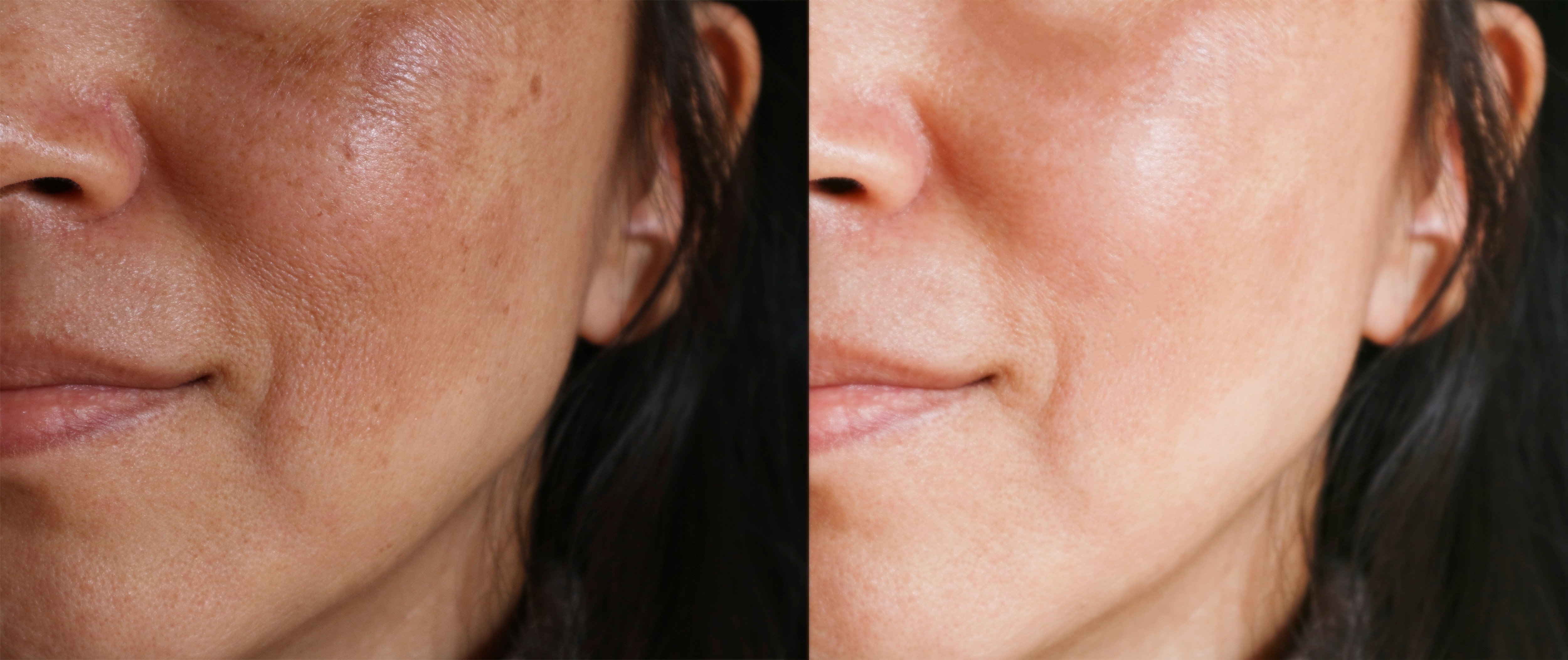
Results, if any, are typically gradual. Some users report that topical GHK-Cu improved skin texture or hydration after consistent use over weeks (1).
However, keep in mind:
Results are not guaranteed
Effects vary widely between individuals
Benefits are generally subtle rather than dramatic
Consistent use is most important
GHK-Cu should be viewed as a supportive ingredient, not a primary treatment for aging or hair loss. Research into its effects on cell repair are still preclinical, meaning that doctors do not yet prescribe GHK-Cu for DNA repair or damaged cells.
GHK-Cu is not FDA approved for oral, IV, or injectable treatments. If you decide to try an investigational product, you should always first consult with your healthcare provider for approval and guidance.
Is GHK-Cu Right for You?
Peptides like GHK-Cu are not uniformly regulated, and product quality can vary significantly.
Key considerations:
Limited long-term human safety data
While copper is an essential micronutrient for the body, too much copper can be dangerous.
Need for medical guidance before using for investigational purposes (oral/injectable)
Long term, consistent use is needed for any possible results
Always consult a qualified healthcare provider before starting peptide-based therapies. If you are concerned about skin aging and are interested in learning more about GHK-Cu, Check your eligibility.
References:
Pickart, L., & Margolina, A. (2018). Regenerative and protective actions of the GHK-Cu peptide in the light of the new gene data. International Journal of Molecular Sciences, 19(7), 1987. https://pmc.ncbi.nlm.nih.gov/articles/PMC6073405/
Pickart, L., Vasquez-Soltero, J. M., & Margolina, A. (2015). GHK & DNA: Resetting the human genome to health. BioMed Research International, 2015, Article 648108. https://pmc.ncbi.nlm.nih.gov/articles/PMC4180391/
Al-Karaghouli, M., & Fang, F. (2020). Physiology, peptide. StatPearls Publishing. https://www.ncbi.nlm.nih.gov/books/NBK562260/
Pickart, L., & Margolina, A. (2018). Skin regenerative and anti-aging actions of the GHK-Cu peptide. Cosmetics, 5(2), 29. https://www.mdpi.com/2079-9284/5/2/29
Pickart, L. (2008). The human tri-peptide GHK and tissue remodeling. Journal of Biomaterials Science, Polymer Edition, 19(8), 969–988. https://doi.org/10.1163/156856208784909435
Pickart, L., Vasquez-Soltero, J. M., & Margolina, A. (2015). GHK peptide as a natural modulator of multiple cellular pathways in skin regeneration. BioMed Research International, 2015. https://pubmed.ncbi.nlm.nih.gov/26236730/
Pyo, H. K., Yoo, H. G., Won, C. H., Lee, S. H., Kang, Y. J., Eun, H. C., Cho, K. H., & Kim, K. H. (2007). The effect of tripeptide-copper complex on human hair growth in vitro. Archives of Pharmacal Research, 30(7), 834–839. https://link.springer.com/article/10.1007/BF02978833
Zhang, Z., Li, W., Chang, D., Wei, Z., Wang, E., Yu, J., Xu, Y., Que, Y., Chen, Y., Fan, C., Ma, B., Zhou, Y., Huan, Z., Yang, C., Guo, F., & Chang, J. (2023). A combination therapy for androgenic alopecia based on quercetin and zinc/copper dual-doped mesoporous silica nanocomposite microneedle patch. Bioactive Materials, 24, 81–95. https://doi.org/10.1016/j.bioactmat.2022.12.007 Cited by: 151
Bo, S. L., Nararatwanchai, T., Supornpun, N., Poomarapan, N., & Thaploka, S. (2026). The efficacy of 2% copper peptide (GHK-Cu) serum for eyebrow hypotrichosis: A randomized, double-blind, vehicle-controlled, split-face comparative study. Procedia of Multidisciplinary Research, 4(5). https://so09.tci-thaijo.org/index.php/PMR/article/view/9318
Xu, S., Zhou, L., Zhao, H., & Li, S. (2025). Advances in transdermal delivery systems for treating androgenetic alopecia. Pharmaceutics, 17(8), Article 984. https://pmc.ncbi.nlm.nih.gov/articles/PMC12389719/
ClinicalTrials.gov. (2026). A Phase 2, Randomized, Double-Blind, Vehicle-Controlled, Split-Wound Study of Topical GHK-Cu (Copper(II)-Peptide Complex) Gel to Accelerate Re-Epithelialization of Standardized Acute Skin Wounds in Healthy Adults. https://clinicaltrials.gov/study/NCT07437586
PLU Laboratories Product Team. (2026, April). Is GHK-Cu safe? What dermatologists say about the GHK-Cu safety profile. PLU Laboratories. https://plulaboratories.com/blogs/copper-peptide-research/is-ghk-cu-safe
Ogórek, K., Nowak, K., Wadych, E., Ruzik, L., Timerbaev, A. R., & Matczuk, M. (2025). Are we ready to measure skin permeation of modern antiaging GHK–Cu tripeptide encapsulated in liposomes? Molecules, 30(1), Article 136. https://doi.org/10.3390/molecules30010136
Taylor, L. G., & Saliba, L. M. (2020). Copper toxicity. StatPearls Publishing. https://www.ncbi.nlm.nih.gov/books/NBK557456/
Empower Pharmacy. (n.d.). GHK-Cu scalp solution. https://www.empowerpharmacy.com/compounding-pharmacy/ghk-cu-scalp-solution/
Westlake Dermatology. (2024, May 15). A dermatologist's take on the copper peptide (GHK-Cu) skin care trend. Westlake Dermatology Clinical Blog. https://www.westlakedermatology.com/blog/ghk-cu-copper-peptides-skin-care/
PLU Laboratories. (2023a, November 8). Can you use copper peptides with Vitamin C? PLU Laboratories Peptide Research Blog. https://plulaboratories.com/blogs/copper-peptide-research/copper-peptides-and-vitamin-c
Disclaimer: This article is for educational purposes only and should not be considered medical advice. The information provided does not constitute recommendations for treatment. Always consult with your healthcare provider about your specific situation, symptoms, and treatment options.
Share this post
Skincare
More articles