Menopause

Menopause

Updated on

Updated on

Menopause Itchy Skin: Causes & Treatments

Menopause Itchy Skin: Causes & Treatments

Itchy skin during menopause is common and usually tied to dropping estrogen levels. Learn why it happens, what ingredients help, and when to see a doctor.

Itchy skin during menopause is common and usually tied to dropping estrogen levels. Learn why it happens, what ingredients help, and when to see a doctor.

Table of Contents

Table of Contents

  • Key Takeaways

  • Why Does Menopause Cause Itchy Skin? 

  • The Role of Estrogen in Skin Hydration and Barrier Function

  • Best Skincare Ingredients for Menopausal Skin Dryness and Itching

    • Some ingredients are especially helpful:

    • For vaginal dryness, common options include: 

  • Lifestyle Changes That Reduce Menopausal Skin Symptoms

  • Does Itchy Skin During Menopause Require Medical Evaluation?

  • FAQs

  • Check Your Eligibility

  • Key Takeaways

  • Why Does Menopause Cause Itchy Skin? 

  • The Role of Estrogen in Skin Hydration and Barrier Function

  • Best Skincare Ingredients for Menopausal Skin Dryness and Itching

    • Some ingredients are especially helpful:

    • For vaginal dryness, common options include: 

  • Lifestyle Changes That Reduce Menopausal Skin Symptoms

  • Does Itchy Skin During Menopause Require Medical Evaluation?

  • FAQs

  • Check Your Eligibility

Key Takeaways

  • Itchy skin is a common part of menopause, mostly due to lower estrogen levels.

  • As estrogen drops, skin can become drier, thinner, and more sensitive.

  • Simple habits like gentle skincare, regular moisturizing, and healthy daily routines can make a big difference.

  • Seek your healthcare provider if your symptoms are severe or persistent.  


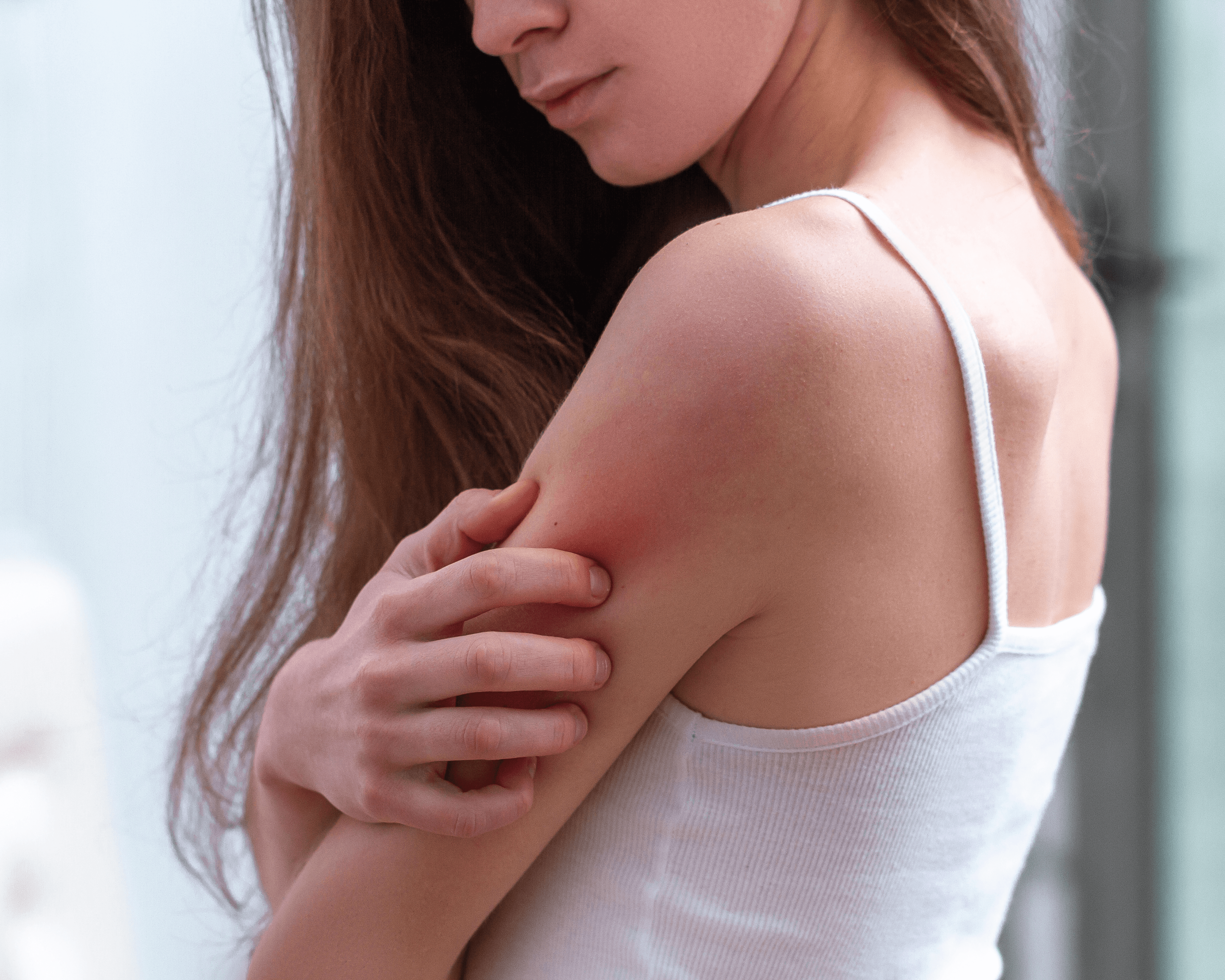
If you’ve noticed your skin feeling itchier than usual during menopause, you’re not alone. Many postmenopausal women deal with persistent itching, also known as pruritus [1-8]. 

Most of the time, menopausal itchy skin is due to hormonal changes [1, 2, 5]. As estrogen levels drop, it affects how your skin holds onto moisture, how well it protects itself, and even how sensitive it is to irritation [1, 2, 5]. So, even small things that never used to bother you can suddenly feel uncomfortable.

The good news is that this itchiness is usually something you can manage with a few simple steps.

Why Does Menopause Cause Itchy Skin? 

Estrogen plays an important role in maintaining skin structure and moisture [1, 2]. When estrogen levels drop during menopause, the skin may become drier, thinner, and more sensitive [1, 2]. All of these changes may cause itching [1].

As estrogen levels drop, your sebaceous (oil) glands become less active [2]. That means your skin produces less of the natural oils that help keep the skin moisturized and prevent water from escaping [2].

There’s also a neurologic piece that doesn’t get talked about enough. Hormonal shifts can make the nerve endings in your skin more sensitive, so even mild dryness can trigger a stronger itch response [2]. That’s why some people feel intensely itchy even when their skin looks relatively normal.

On top of that, external factors, like dry air, hot showers, or friction from clothing, start to have a bigger impact than they used to [2,4]. It’s not that these things are new, it’s that your skin is less resilient to them now.

Low levels of estrogen can also cause vaginal dryness and itchiness [5, 7]. Estrogen keeps vaginal tissues moisturized so when estrogen levels drop, vaginal dryness, or vaginal atrophy, occurs [5, 7]. 

Common symptoms include [7]:

  • Itching and burning 

  • Bleeding during sex 

  • Frequent urinary tract infections (UTIs) or yeast infections

  • Needing to pee more often

The Role of Estrogen in Skin Hydration and Barrier Function

Estrogen does a lot more for your skin than most people think, and menopause is usually when you really start to notice it. 

When estrogen levels are higher, your skin is just better at doing its job [1, 2, 5]. It holds onto moisture more easily, the barrier stays stronger, collagen production is higher (which helps with thickness and elasticity), and your skin heals faster when it gets irritated [1, 2, 5]. As estrogen levels start to drop, all of that slows down [1,2]. 

Over time, this leads to structural changes [5]. The outer layer of your skin becomes thinner and not as protective, collagen decreases so the skin feels more fragile, and you lose more water through the skin, which makes dryness worse [1, 2, 5].

You might also notice that your skin doesn’t bounce back the way it used to, whether that’s from dryness, irritation, or even something minor like a scratch [5].

And there’s more going on than just what you can see. Estrogen also plays a role in regulating inflammation, immune responses, and blood flow in the skin [2, 5]. Without it, your skin can become more sensitive or reactive to things like temperature changes or sun exposure [5].

The skin functions as a neuroendocrine organ [2, 5], meaning it’s in constant communication with both hormones and the nervous system. During menopause, that signaling can get disrupted, which is part of the reason why itching can feel more noticeable [2, 5]. 

Best Skincare Ingredients for Menopausal Skin Dryness and Itching

When it comes to menopause-related skin changes, you don’t need a complicated routine. The key is keeping things simple and gentle while supporting your skin barrier.

Some ingredients are especially helpful:

  • Ceramides [8]

  • Hyaluronic acid [4]

  • Glycerin [4]

  • Petrolatum or thicker creams: lock in moisture and reduce water loss [8]

  • Anti-itch ingredients (like pramoxine, lidocaine, menthol, camphor, and phenol) [3, 8]

  • Hydrocortisone: calms inflammation and itching [3, 6, 8]

In real life, this usually means using a thicker, fragrance-free moisturizer consistently, ideally twice a day and especially after bathing while your skin is still slightly damp. Avoid products with strong fragrances, alcohol, or harsh exfoliants which can worsen dryness [4]. Gentle and simple often works best. 

For vaginal dryness, common options include: 

  • Vaginal moisturizers [3, 7]

  • Water-based lubricants before sex [3, 7]

  • Low-dose vaginal estrogen (creams, tablets, or rings) [3, 7]

  • Oral ospemifene (Osphena), an FDA-approved selective estrogen receptor modulator (SERM) to treat painful intercourse [7]

  • Dehydroepiandrosterone (DHEA), a hormone that acts like estrogen [3, 7]

Lifestyle Changes That Reduce Menopausal Skin Symptoms

Small daily habits can make a big difference in managing skin symptoms:

  • Keep showers short and use warm (not hot) water [3, 4, 6]

  • Try oatmeal baths to soothe irritation [6]

  • Use mild cleansers instead of regular soap [4, 7]

  • Use fragrance-free products [4]

  • Moisturize right after you get out of the bath or shower [4]

  • Wear soft, breathable fabrics like cotton to reduce rubbing and irritation [6, 7]

  • Use a humidifier if the air is dry [3]

  • Apply cold compresses to itchy areas [6]

  • Drink plenty of water [3, 7]

Scratching is completely understandable but can worsen irritation [6], creating a cycle where your skin becomes even more sensitive. Keeping the skin hydrated helps reduce the urge to scratch, even if it doesn’t stop it completely. 

Sun protection is important too [4]. UV exposure can worsen dryness and weaken your skin barrier. Using sunscreen and wearing protective clothing not only shields you from the sun but also helps manage symptoms [4].

Does Itchy Skin During Menopause Require Medical Evaluation?

Itchy skin is common during menopause, but that doesn’t mean you just have to deal with it, especially if symptoms are severe. It’s worth getting checked if [7]:

  • Over-the-counter treatments aren’t helping

  • The itching interferes with sleep or daily life 

  • There’s a rash, redness, or broken skin

  • Symptoms feel unusual or out of proportion

Hormone replacement therapy (HRT) isn’t usually started just for skin symptoms. But if someone is already on HRT for other menopausal symptoms, they might notice their skin feels more hydrated and less fragile over time [8]. 

Luckily, there are various treatment options for menopause symptoms, so talk to your healthcare provider about what’s right for you! 

FAQs

Does menopause cause itchy skin?

Yes, itchy skin is common during menopause. There are several reasons why. For one, estrogen plays a role in the skin’s ability to hold moisture and produce natural oils. With decreased levels of estrogen, your skin becomes drier, thinner, and more sensitive, which can cause itchiness. This hormonal change may also make nerve endings in your skin more sensitive, so even slight dryness may irritate your skin more than it normally would.

Is itchy skin a sign of perimenopause?

It can be. Some women experience changes to their skin, such as itchiness or dryness, during perimenopause, the years leading up to menopause when hormonal changes begin. If you’re in your 40s and are experiencing unexplained or new itchiness, especially if you’re also experiencing other symptoms like irregular periods, hot flashes, or changes in your sleep, hormonal changes may be the culprit.

What supplements help with menopause itchy skin?

Some women find relief with supplements that support skin hydration from the inside out. Omega-3 fatty acids may help strengthen and support the skin barrier while reducing inflammation. Collagen can which may improve the elasticity and hydration of skin. Evening primrose oil os another commonly used option for menopausal skin symptoms. While some research suggests they may help, the evidence is mixed, and you should talk to your healthcare provider before adding a supplement, especially if you’re taking medications.

How long does menopause itchy skin last?

It depends. For some women, itchy skin goes away once their hormone levels regulate post-menopause, which can take a few years. For others, they may experience long-term skin dryness and sensitivity that will require ongoing management with moisturizer and gentle skin care. But in either case, itchy skin associated with menopause responds well to good skin care habits, like using a thick fragrance-free moisturizer and avoiding hot showers.

Can menopause cause itchy skin all over the body?

Yes. Some women only experience itchiness on certain areas, like their face, arms, or legs. But others may experience itchiness all over their body. This is because the loss of estrogen affects the skin on your entire body, not just one area. It’s common to experience itching all over without any rash during menopause, and it’s usually due to dryness and sensitive nerve endings. If the itching persists or if you have a rash, talk to your provider to rule out other causes.

Check Your Eligibility

If you're experiencing menopausal itchy skin, you’re not alone! A healthcare provider on Mochi Health's telehealth platform can help you determine the best course of action for your needs. Check your eligibility here.

Disclaimer: This information is for educational purposes only and is not a substitute for medical advice. Always consult with your healthcare provider about your specific situation, symptoms, and treatment options.


References 

  1. Zouboulis, C. C., Blume-Peytavi, U., Kosmadaki, M., Roó, E., Vexiau-Robert, D., Kerob, D., & Goldstein, S. R. (2022). Skin, hair and beyond: The impact of menopause. Climacteric, 25(5), 434–442.https://doi.org/10.1080/13697137.2022.2050206

  2. Kamp, E., Ashraf, M., Musbahi, E., & DeGiovanni, C. (2022). Menopause, skin and common dermatoses. Part 2: Skin disorders. Clinical and Experimental Dermatology, 47(12), 2117–2122. https://doi.org/10.1111/ced.15308

  3. Steinman, M. A., & American Geriatrics Society Beers Criteria® Alternatives Panel. (2025). Alternative treatments to selected medications in the 2023 American Geriatrics Society Beers Criteria®. Journal of the American Geriatrics Society, 73(9), 2657–2677.https://doi.org/10.1111/jgs.19500

  4. American Academy of Dermatology. (2023). Caring for your skin during menopause.https://www.aad.org/public/everyday-care/skin-care-secrets/anti-aging/skin-care-during-menopause

  5. Hall, G., & Phillips, T. J. (2005). Estrogen and skin: The effects of estrogen, menopause, and hormone replacement therapy on the skin. Journal of the American Academy of Dermatology, 53(4), 555–568.

  6. MedlinePlus. (n.d.). Itching.https://medlineplus.gov/itching.html

  7. Cleveland Clinic. (2026, February 3). Vaginal dryness.https://my.clevelandclinic.org/health/symptoms/21027-vaginal-dryness  

  8. Kendall, A. C., Pilkington, S. M., Wray, J. R., Newton, V. L., Griffiths, C. E. M., Bell, M., Watson, R. E. B., & Nicolaou, A. (2022). Menopause induces changes to the stratum corneum ceramide profile, which are prevented by hormone replacement therapy. Scientific reports, 12(1), 21715. https://doi.org/10.1038/s41598-022-26095-0

Key Takeaways

  • Itchy skin is a common part of menopause, mostly due to lower estrogen levels.

  • As estrogen drops, skin can become drier, thinner, and more sensitive.

  • Simple habits like gentle skincare, regular moisturizing, and healthy daily routines can make a big difference.

  • Seek your healthcare provider if your symptoms are severe or persistent.  


If you’ve noticed your skin feeling itchier than usual during menopause, you’re not alone. Many postmenopausal women deal with persistent itching, also known as pruritus [1-8]. 

Most of the time, menopausal itchy skin is due to hormonal changes [1, 2, 5]. As estrogen levels drop, it affects how your skin holds onto moisture, how well it protects itself, and even how sensitive it is to irritation [1, 2, 5]. So, even small things that never used to bother you can suddenly feel uncomfortable.

The good news is that this itchiness is usually something you can manage with a few simple steps.

Why Does Menopause Cause Itchy Skin? 

Estrogen plays an important role in maintaining skin structure and moisture [1, 2]. When estrogen levels drop during menopause, the skin may become drier, thinner, and more sensitive [1, 2]. All of these changes may cause itching [1].

As estrogen levels drop, your sebaceous (oil) glands become less active [2]. That means your skin produces less of the natural oils that help keep the skin moisturized and prevent water from escaping [2].

There’s also a neurologic piece that doesn’t get talked about enough. Hormonal shifts can make the nerve endings in your skin more sensitive, so even mild dryness can trigger a stronger itch response [2]. That’s why some people feel intensely itchy even when their skin looks relatively normal.

On top of that, external factors, like dry air, hot showers, or friction from clothing, start to have a bigger impact than they used to [2,4]. It’s not that these things are new, it’s that your skin is less resilient to them now.

Low levels of estrogen can also cause vaginal dryness and itchiness [5, 7]. Estrogen keeps vaginal tissues moisturized so when estrogen levels drop, vaginal dryness, or vaginal atrophy, occurs [5, 7]. 

Common symptoms include [7]:

  • Itching and burning 

  • Bleeding during sex 

  • Frequent urinary tract infections (UTIs) or yeast infections

  • Needing to pee more often

The Role of Estrogen in Skin Hydration and Barrier Function

Estrogen does a lot more for your skin than most people think, and menopause is usually when you really start to notice it. 

When estrogen levels are higher, your skin is just better at doing its job [1, 2, 5]. It holds onto moisture more easily, the barrier stays stronger, collagen production is higher (which helps with thickness and elasticity), and your skin heals faster when it gets irritated [1, 2, 5]. As estrogen levels start to drop, all of that slows down [1,2]. 

Over time, this leads to structural changes [5]. The outer layer of your skin becomes thinner and not as protective, collagen decreases so the skin feels more fragile, and you lose more water through the skin, which makes dryness worse [1, 2, 5].

You might also notice that your skin doesn’t bounce back the way it used to, whether that’s from dryness, irritation, or even something minor like a scratch [5].

And there’s more going on than just what you can see. Estrogen also plays a role in regulating inflammation, immune responses, and blood flow in the skin [2, 5]. Without it, your skin can become more sensitive or reactive to things like temperature changes or sun exposure [5].

The skin functions as a neuroendocrine organ [2, 5], meaning it’s in constant communication with both hormones and the nervous system. During menopause, that signaling can get disrupted, which is part of the reason why itching can feel more noticeable [2, 5]. 

Best Skincare Ingredients for Menopausal Skin Dryness and Itching

When it comes to menopause-related skin changes, you don’t need a complicated routine. The key is keeping things simple and gentle while supporting your skin barrier.

Some ingredients are especially helpful:

  • Ceramides [8]

  • Hyaluronic acid [4]

  • Glycerin [4]

  • Petrolatum or thicker creams: lock in moisture and reduce water loss [8]

  • Anti-itch ingredients (like pramoxine, lidocaine, menthol, camphor, and phenol) [3, 8]

  • Hydrocortisone: calms inflammation and itching [3, 6, 8]

In real life, this usually means using a thicker, fragrance-free moisturizer consistently, ideally twice a day and especially after bathing while your skin is still slightly damp. Avoid products with strong fragrances, alcohol, or harsh exfoliants which can worsen dryness [4]. Gentle and simple often works best. 

For vaginal dryness, common options include: 

  • Vaginal moisturizers [3, 7]

  • Water-based lubricants before sex [3, 7]

  • Low-dose vaginal estrogen (creams, tablets, or rings) [3, 7]

  • Oral ospemifene (Osphena), an FDA-approved selective estrogen receptor modulator (SERM) to treat painful intercourse [7]

  • Dehydroepiandrosterone (DHEA), a hormone that acts like estrogen [3, 7]

Lifestyle Changes That Reduce Menopausal Skin Symptoms

Small daily habits can make a big difference in managing skin symptoms:

  • Keep showers short and use warm (not hot) water [3, 4, 6]

  • Try oatmeal baths to soothe irritation [6]

  • Use mild cleansers instead of regular soap [4, 7]

  • Use fragrance-free products [4]

  • Moisturize right after you get out of the bath or shower [4]

  • Wear soft, breathable fabrics like cotton to reduce rubbing and irritation [6, 7]

  • Use a humidifier if the air is dry [3]

  • Apply cold compresses to itchy areas [6]

  • Drink plenty of water [3, 7]

Scratching is completely understandable but can worsen irritation [6], creating a cycle where your skin becomes even more sensitive. Keeping the skin hydrated helps reduce the urge to scratch, even if it doesn’t stop it completely. 

Sun protection is important too [4]. UV exposure can worsen dryness and weaken your skin barrier. Using sunscreen and wearing protective clothing not only shields you from the sun but also helps manage symptoms [4].

Does Itchy Skin During Menopause Require Medical Evaluation?

Itchy skin is common during menopause, but that doesn’t mean you just have to deal with it, especially if symptoms are severe. It’s worth getting checked if [7]:

  • Over-the-counter treatments aren’t helping

  • The itching interferes with sleep or daily life 

  • There’s a rash, redness, or broken skin

  • Symptoms feel unusual or out of proportion

Hormone replacement therapy (HRT) isn’t usually started just for skin symptoms. But if someone is already on HRT for other menopausal symptoms, they might notice their skin feels more hydrated and less fragile over time [8]. 

Luckily, there are various treatment options for menopause symptoms, so talk to your healthcare provider about what’s right for you! 

FAQs

Does menopause cause itchy skin?

Yes, itchy skin is common during menopause. There are several reasons why. For one, estrogen plays a role in the skin’s ability to hold moisture and produce natural oils. With decreased levels of estrogen, your skin becomes drier, thinner, and more sensitive, which can cause itchiness. This hormonal change may also make nerve endings in your skin more sensitive, so even slight dryness may irritate your skin more than it normally would.

Is itchy skin a sign of perimenopause?

It can be. Some women experience changes to their skin, such as itchiness or dryness, during perimenopause, the years leading up to menopause when hormonal changes begin. If you’re in your 40s and are experiencing unexplained or new itchiness, especially if you’re also experiencing other symptoms like irregular periods, hot flashes, or changes in your sleep, hormonal changes may be the culprit.

What supplements help with menopause itchy skin?

Some women find relief with supplements that support skin hydration from the inside out. Omega-3 fatty acids may help strengthen and support the skin barrier while reducing inflammation. Collagen can which may improve the elasticity and hydration of skin. Evening primrose oil os another commonly used option for menopausal skin symptoms. While some research suggests they may help, the evidence is mixed, and you should talk to your healthcare provider before adding a supplement, especially if you’re taking medications.

How long does menopause itchy skin last?

It depends. For some women, itchy skin goes away once their hormone levels regulate post-menopause, which can take a few years. For others, they may experience long-term skin dryness and sensitivity that will require ongoing management with moisturizer and gentle skin care. But in either case, itchy skin associated with menopause responds well to good skin care habits, like using a thick fragrance-free moisturizer and avoiding hot showers.

Can menopause cause itchy skin all over the body?

Yes. Some women only experience itchiness on certain areas, like their face, arms, or legs. But others may experience itchiness all over their body. This is because the loss of estrogen affects the skin on your entire body, not just one area. It’s common to experience itching all over without any rash during menopause, and it’s usually due to dryness and sensitive nerve endings. If the itching persists or if you have a rash, talk to your provider to rule out other causes.

Check Your Eligibility

If you're experiencing menopausal itchy skin, you’re not alone! A healthcare provider on Mochi Health's telehealth platform can help you determine the best course of action for your needs. Check your eligibility here.

Disclaimer: This information is for educational purposes only and is not a substitute for medical advice. Always consult with your healthcare provider about your specific situation, symptoms, and treatment options.


References 

  1. Zouboulis, C. C., Blume-Peytavi, U., Kosmadaki, M., Roó, E., Vexiau-Robert, D., Kerob, D., & Goldstein, S. R. (2022). Skin, hair and beyond: The impact of menopause. Climacteric, 25(5), 434–442.https://doi.org/10.1080/13697137.2022.2050206

  2. Kamp, E., Ashraf, M., Musbahi, E., & DeGiovanni, C. (2022). Menopause, skin and common dermatoses. Part 2: Skin disorders. Clinical and Experimental Dermatology, 47(12), 2117–2122. https://doi.org/10.1111/ced.15308

  3. Steinman, M. A., & American Geriatrics Society Beers Criteria® Alternatives Panel. (2025). Alternative treatments to selected medications in the 2023 American Geriatrics Society Beers Criteria®. Journal of the American Geriatrics Society, 73(9), 2657–2677.https://doi.org/10.1111/jgs.19500

  4. American Academy of Dermatology. (2023). Caring for your skin during menopause.https://www.aad.org/public/everyday-care/skin-care-secrets/anti-aging/skin-care-during-menopause

  5. Hall, G., & Phillips, T. J. (2005). Estrogen and skin: The effects of estrogen, menopause, and hormone replacement therapy on the skin. Journal of the American Academy of Dermatology, 53(4), 555–568.

  6. MedlinePlus. (n.d.). Itching.https://medlineplus.gov/itching.html

  7. Cleveland Clinic. (2026, February 3). Vaginal dryness.https://my.clevelandclinic.org/health/symptoms/21027-vaginal-dryness  

  8. Kendall, A. C., Pilkington, S. M., Wray, J. R., Newton, V. L., Griffiths, C. E. M., Bell, M., Watson, R. E. B., & Nicolaou, A. (2022). Menopause induces changes to the stratum corneum ceramide profile, which are prevented by hormone replacement therapy. Scientific reports, 12(1), 21715. https://doi.org/10.1038/s41598-022-26095-0

Read next

Feb 2, 2026

How Mochi is Building a Provider Network That Puts Patients First

Jan 26, 2026

How Mochi is Transforming Medication Access

Dec 9, 2025

GLP-1s for Pre-diabetes: Can You Prevent Type II Diabetes?

Dec 2, 2025

The Stigma Problem: Why Patients on GLP-1s Don't Owe Anyone an Explanation

Nov 21, 2025

Which Additive is Best for You? GLP-1 Additives Explained: B12, L-Carnitine, and More

Nov 20, 2025

The Link Between GLP-1s and Inflammation: CRP, Cytokines, and Immune Effects

Nov 19, 2025

CagriSema: The New GLP 1 and Amylin Combination That May Transform Obesity Treatment

Nov 19, 2025

GLP 1s and Cardiometabolic Health: How These Medications Support the Heart and Long Term Wellness

Nov 18, 2025

Why Protein Intake Matters on GLP-1 Medications and How Much You Really Need

Nov 17, 2025

Mochi NAD+: Understanding How This Essential Molecule Supports Energy, Cellular Health, and Longevity

Nov 16, 2025

Mochi Menopause: Expert Menopause Care with Estradiol Pills, Progesterone, and Hormone Creams

Oct 31, 2025

What is GLP-1 Microdosing & How Does it Work?

Ready to transform your health?

Unlock access to expert guidance and a weight care plan crafted just for you.

Ready to transform your health?

Unlock access to expert guidance and a weight care plan crafted just for you.

Ready to transform your health?

Unlock access to expert guidance and a weight care plan crafted just for you.

Personalized care designed for you.

© 2026 Mochi Health

All professional medical services are provided by licensed physicians and clinicians affiliated with independently owned and operated professional practices. Mochi Health Corp. provides administrative and technology services to affiliated medical practices it supports, and does not provide any professional medical services itself.

Personalized care designed for you.

© 2026 Mochi Health

All professional medical services are provided by licensed physicians and clinicians affiliated with independently owned and operated professional practices. Mochi Health Corp. provides administrative and technology services to affiliated medical practices it supports, and does not provide any professional medical services itself.

Personalized care designed for you.

© 2026 Mochi Health

All professional medical services are provided by licensed physicians and clinicians affiliated with independently owned and operated professional practices. Mochi Health Corp. provides administrative and technology services to affiliated medical practices it supports, and does not provide any professional medical services itself.