All articles
Mounjaro® Side Effects: Causes & Treatments
Reading time:
7 min

Weight loss
Get expert guidance and a personalized care plan designed around you.
Mounjaro® Proper Use and Dosage
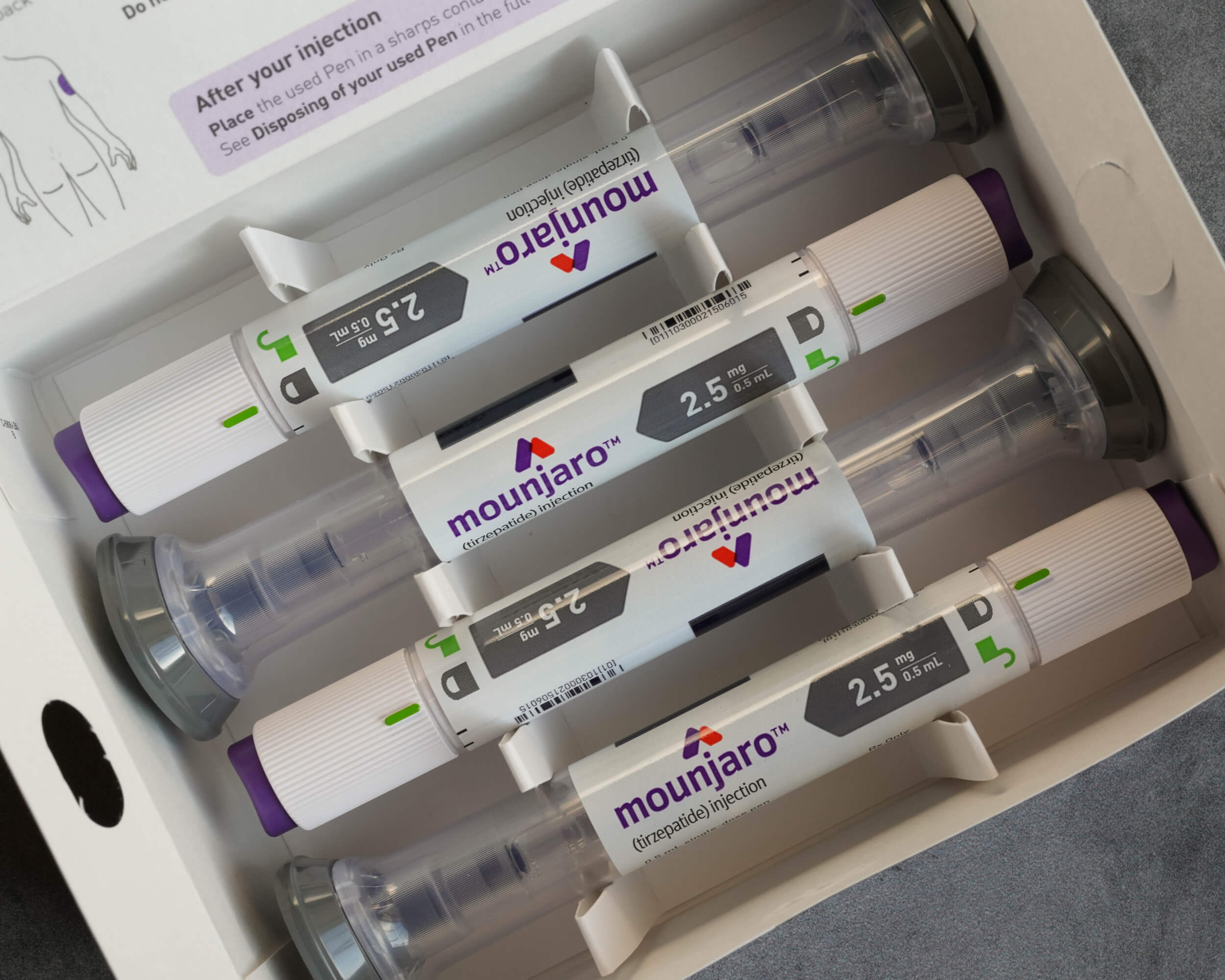
Mounjaro®, a once-weekly self-administered injection, offers convenience and ease of use. Simply cleanse the injection site (such as the abdomen or thigh) with an alcohol wipe, unlock the pen, and press and hold the button for up to 10 seconds, listening for two clicks indicating the start and completion of the injection.
The dosing regimen starts at 2.5 mg once weekly for 4 weeks, then increases to 5 mg once weekly. If necessary, the dose can be further increased by 2.5 mg per week every 4 weeks, up to a maximum of 15 mg per week. The lower initial dose of 2.5 mg aims to minimize gastrointestinal symptoms (e.g nausea, vomiting, constipation) but may not lead to significant weight loss. If a dose is missed, administer it as soon as possible within 4 days and resume the usual schedule thereafter. If more than 4 days have passed, skip the missed dose and continue with the next scheduled weekly dose.
References:
Jastreboff, A. M., Aronne, L. J., & Stefanski, A. (2022). Tirzepatide Once Weekly for the Treatment of Obesity. Reply. The New England Journal of Medicine, 387(15), 1434–1435. https://doi.org/10.1056/NEJMc2211120
de Mesquita, Y. L. L., Pera Calvi, I., Reis Marques, I., Almeida Cruz, S., Padrao, E. M. H., Carvalho, P. E. de P., da Silva, C. H. A., Cardoso, R., Moura, F. A., & Rafalskiy, V. V. (2023). Efficacy and safety of the dual GIP and GLP-1 receptor agonist tirzepatide for weight loss: a meta-analysis of randomized controlled trials. International Journal of Obesity, 47(10), 883–892. https://doi.org/10.1038/s41366-023-01337-x
Karrar, H. R., Nouh, M. I., Nouh, Y. I., Nouh, M. I., Khan Alhindi, A. S., Hemeq, Y. H., Aljameeli, A. M., Aljuaid, J. A., Alzahrani, S. J., Alsatami, A. A., Alkredees, M. A., Almuqati, A. O., Abanmi, S. N., & Alshehri, A. M. (2023). Tirzepatide-Induced Gastrointestinal Manifestations: A Systematic Review and Meta-Analysis. Curēus (Palo Alto, CA), 15(9), e46091–e46091. https://doi.org/10.7759/cureus.46091
Aleman Espino, A., Aleman Espino, E., Aleman Oliva, C., Monteagudo, H., & Frontela, O. (2023). An Incidental Finding of a Glucagon-Like Peptide 1 (GLP-1)-Induced Acute Kidney Injury: A Case Report. In Cureus (Vol. 15, Issue 9, pp. e45261–e45261). https://doi.org/10.7759/cureus.45261
Simo, R., & Hernoandez, C. (2017). GLP-1R as a Target for the Treatment of Diabetic Retinopathy: Friend or Foe? Diabetes (New York, N.Y.), 66(6), 1453–1460. https://doi.org/10.2337/db16-1364
Yadav, D., & Lowenfels, A. B. (2013). The Epidemiology of Pancreatitis and Pancreatic Cancer. Gastroenterology (New York, N.Y. 1943), 144(6), 1252–1261. https://doi.org/10.1053/j.gastro.2013.01.068
Korkmaz, H., Araz, M., Alkan, S., & Akarsu, E. (2015). Liraglutide-related cholelithiasis. Aging Clinical and Experimental Research, 27(5), 751–753. https://doi.org/10.1007/s40520-015-0335-2
FDA drug safety communication: FDA investigating reports of possible increased risk of pancreatitis and pre-cancerous findings of the pancreas from incretin mimetic drugs for type 2 diabetes. Food and Drug Administration. Updated February 21, 2018. Accessed April 16, 2024. https://www.fda.gov/drugs/drug-safety-and-availability/fda-drug-safety-communication-fda-investigating-reports-possible-increased-risk-pancreatitis-and-pre
Share this post
Weight loss
More articles