All articles

Wegovy Pill: How It Works, Dosing, and How to Get It

Reading time:

9 min

Published on

Updated on

Weight loss

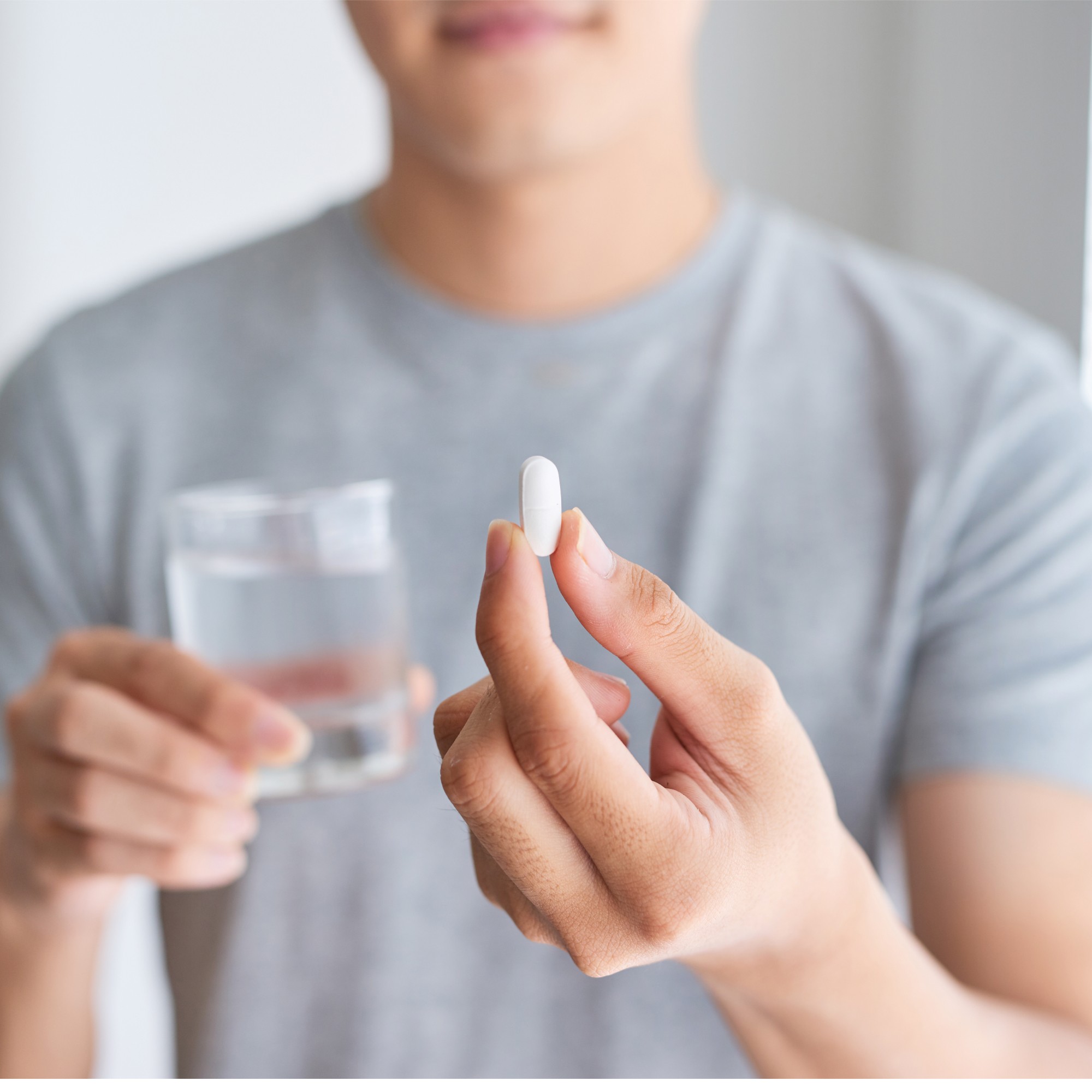
person holding a pill

Ready to transform your health?

Ready to transform your health?

Get expert guidance and a personalized care plan designed around you.

Key Takeaways

  • The Wegovy® pill is a once-daily 25 mg tablet containing semaglutide, the same active ingredient as the Wegovy injection. FDA-approved on December 22, 2025, it is the first oral GLP-1 medication approved for chronic weight management. It reached US pharmacies in January 2026.

  • It uses the same active ingredient as the weekly injection. In the OASIS 4 trial, participants lost 13.6% of their body weight on average, and 16.6% among those who took it as directed, over 64 weeks. That is broadly in the range of the injection's trial results.

  • It is most effective if you take it correctly: one tablet on an empty stomach with no more than 4 oz of plain water, then wait at least 30 minutes before any food, coffee, or other pills.

  • The dose climbs over about four months (1.5 mg, then 4 mg, then 9 mg, then 25 mg). Nausea and other stomach side effects are most common during that climb.

  • Cost varies a lot: roughly $149 to $299 a month self-pay, as little as $25 a month with commercial insurance plus the savings offer, or $50 a month for eligible Medicare beneficiaries through the GLP-1 Bridge.

For years, a lot of people who might have benefited from a GLP-1 medication never started one, and the reason had nothing to do with how well it works. It was the needle. Needle anxiety is common, and for some people the idea of a weekly self-injection was enough to rule the whole category out.

That changed in January 2026, when the first GLP-1 pill for weight loss hit US pharmacies. On paper, a once-daily tablet sounds simpler than an injection. In practice, it comes with a strict morning routine, its own dosing ladder that builds over several months, and a price and coverage picture.

Continue reading to learn more about how oral semaglutide works, the exact dosing schedule, what results the trials actually showed, what it costs, and how to get a prescription.

Key Takeaways

  • The Wegovy® pill is a once-daily 25 mg tablet containing semaglutide, the same active ingredient as the Wegovy injection. FDA-approved on December 22, 2025, it is the first oral GLP-1 medication approved for chronic weight management. It reached US pharmacies in January 2026.

  • It uses the same active ingredient as the weekly injection. In the OASIS 4 trial, participants lost 13.6% of their body weight on average, and 16.6% among those who took it as directed, over 64 weeks. That is broadly in the range of the injection's trial results.

  • It is most effective if you take it correctly: one tablet on an empty stomach with no more than 4 oz of plain water, then wait at least 30 minutes before any food, coffee, or other pills.

  • The dose climbs over about four months (1.5 mg, then 4 mg, then 9 mg, then 25 mg). Nausea and other stomach side effects are most common during that climb.

  • Cost varies a lot: roughly $149 to $299 a month self-pay, as little as $25 a month with commercial insurance plus the savings offer, or $50 a month for eligible Medicare beneficiaries through the GLP-1 Bridge.

For years, a lot of people who might have benefited from a GLP-1 medication never started one, and the reason had nothing to do with how well it works. It was the needle. Needle anxiety is common, and for some people the idea of a weekly self-injection was enough to rule the whole category out.

That changed in January 2026, when the first GLP-1 pill for weight loss hit US pharmacies. On paper, a once-daily tablet sounds simpler than an injection. In practice, it comes with a strict morning routine, its own dosing ladder that builds over several months, and a price and coverage picture.

Continue reading to learn more about how oral semaglutide works, the exact dosing schedule, what results the trials actually showed, what it costs, and how to get a prescription.

What Is the Wegovy Pill?

The Wegovy® pill is a once-daily 25 mg tablet containing semaglutide, the same active ingredient as the Wegovy injection. FDA-approved on December 22, 2025, it is the first oral GLP-1 medication approved for chronic weight management and became available in US pharmacies in January 2026.

It is approved for adults with obesity (a body mass index, or BMI, of 30 or higher) or overweight (a BMI of 27 or higher) who also have at least one weight-related condition, alongside a reduced-calorie diet and more physical activity. It is also indicated to reduce the risk of major cardiovascular events in eligible adults.

The pill uses the same active ingredient as the weekly Wegovy® injection: semaglutide. The difference is the delivery. One is a tablet you take every morning, the other is a shot you take once a week.

What Is the Wegovy Pill?

The Wegovy® pill is a once-daily 25 mg tablet containing semaglutide, the same active ingredient as the Wegovy injection. FDA-approved on December 22, 2025, it is the first oral GLP-1 medication approved for chronic weight management and became available in US pharmacies in January 2026.

It is approved for adults with obesity (a body mass index, or BMI, of 30 or higher) or overweight (a BMI of 27 or higher) who also have at least one weight-related condition, alongside a reduced-calorie diet and more physical activity. It is also indicated to reduce the risk of major cardiovascular events in eligible adults.

The pill uses the same active ingredient as the weekly Wegovy® injection: semaglutide. The difference is the delivery. One is a tablet you take every morning, the other is a shot you take once a week.

How Does the Wegovy Pill Work?

Semaglutide is a GLP-1 receptor agonist. In plain language, it mimics a gut hormone your body releases after you eat. It works on appetite in a few ways at once: it slows how quickly your stomach empties, so you feel full longer; it turns down appetite and food-related cravings; and it helps steady the signals that tell your brain you have had enough. The result, for many people, is eating less without white-knuckling through constant hunger.

That mechanism is the same whether semaglutide comes as a pill or a shot. What is different, and what makes or breaks the pill, is getting the medication into your bloodstream in the first place. For more on how the two formulations compare under the hood, see our guide to oral vs. injectable GLP-1s.

How Does the Wegovy Pill Work?

Semaglutide is a GLP-1 receptor agonist. In plain language, it mimics a gut hormone your body releases after you eat. It works on appetite in a few ways at once: it slows how quickly your stomach empties, so you feel full longer; it turns down appetite and food-related cravings; and it helps steady the signals that tell your brain you have had enough. The result, for many people, is eating less without white-knuckling through constant hunger.

That mechanism is the same whether semaglutide comes as a pill or a shot. What is different, and what makes or breaks the pill, is getting the medication into your bloodstream in the first place. For more on how the two formulations compare under the hood, see our guide to oral vs. injectable GLP-1s.

Why You Have to Take It on an Empty Stomach

Semaglutide is a large peptide molecule, and peptides are normally destroyed in the stomach before they can be absorbed. To get around that, the pill is formulated with an absorption enhancer called SNAC (sodium N-[8-(2-hydroxybenzoyl) amino] caprylate). SNAC creates a small, temporary window right at the stomach lining where a little semaglutide can slip into the bloodstream. Even so, only about 1% of the dose is actually absorbed.

Because that window is so narrow, anything else in your stomach can effectively erase the day's dose. Food, coffee, and other oral medications all interfere with absorption. Splitting, crushing, or chewing the tablet breaks it too. This is why the empty-stomach rule is not a suggestion. It is the difference between a working dose and a wasted one.

Here is what a correct morning looks like: take the tablet first thing after you wake up, on an empty stomach, with no more than 4 oz (about half a cup) of plain water. Swallow it whole. Then wait at least 30 minutes before eating, drinking anything else, or taking other pills. After that half hour, breakfast, and coffee are fine. And if you miss a dose, skip it. Do not double up the next day.

Why You Have to Take It on an Empty Stomach

Semaglutide is a large peptide molecule, and peptides are normally destroyed in the stomach before they can be absorbed. To get around that, the pill is formulated with an absorption enhancer called SNAC (sodium N-[8-(2-hydroxybenzoyl) amino] caprylate). SNAC creates a small, temporary window right at the stomach lining where a little semaglutide can slip into the bloodstream. Even so, only about 1% of the dose is actually absorbed.

Because that window is so narrow, anything else in your stomach can effectively erase the day's dose. Food, coffee, and other oral medications all interfere with absorption. Splitting, crushing, or chewing the tablet breaks it too. This is why the empty-stomach rule is not a suggestion. It is the difference between a working dose and a wasted one.

Here is what a correct morning looks like: take the tablet first thing after you wake up, on an empty stomach, with no more than 4 oz (about half a cup) of plain water. Swallow it whole. Then wait at least 30 minutes before eating, drinking anything else, or taking other pills. After that half hour, breakfast, and coffee are fine. And if you miss a dose, skip it. Do not double up the next day.

Wegovy Pill Dosing Schedule

You do not start at the full dose. The Wegovy pill steps up gradually, roughly every 30 days, to give your digestive system time to adjust. Starting low and going slow is what keeps side effects manageable for most people.

Dose

Duration

What to expect

1.5 mg

Days 1–30

A starting dose to ease you in. Appetite effects may be mild at first. Some early nausea is common as your body adjusts.

4 mg

Days 31–60

Appetite suppression usually becomes more noticeable. GI side effects can flare again briefly after each step up.

9 mg

Days 61–90

Many people feel clear changes in hunger and portion sizes at this stage.

25 mg

Day 91 onward (maintenance)

The studied maintenance dose. This is where the full trial results were measured, and where weight loss continues to build over time.

The available tablet strengths are 1.5, 4, 9, and 25 mg, and 25 mg is the maintenance dose studied in the trials. The 30-day cadence is a default, not a rule carved in stone. If side effects flare, a provider can keep you on a lower dose longer before moving up. A slower climb is completely reasonable and does not mean the medication is not working.

Worth noting: this schedule is specific to the pill. The weekly injection follows its own separate titration. If you are comparing the two, see the Wegovy injection dosage schedule.

How Well Does the Wegovy Pill Work?

The main evidence comes from the OASIS 4 trial, published in the New England Journal of Medicine in 2025. Researchers enrolled 307 adults with overweight or obesity but without diabetes and followed them for 64 weeks on treatment.

In that trial, participants taking oral semaglutide 25 mg lost 13.6% of their body weight on average, compared with 2.4% for those on placebo. Among participants who took the medication as directed, the average loss was 16.6%. About one in three (34.4%) lost at least 20% of their body weight, versus fewer than 3% on placebo. The results were also measured alongside diet and physical activity, not instead of them.

Is the pill as effective as the shot?

Broadly, the trial results look comparable, but there is an important caveat: the pill and the injection have never been tested head-to-head, so this is a comparison across separate trials rather than a direct contest.


Wegovy pill (oral semaglutide 25 mg)

Wegovy injection (semaglutide 2.4 mg)

How often

Once daily, by mouth

Once weekly, injected under the skin

Administration rules

Empty stomach, up to 4 oz water, wait 30 minutes

Any time of day, with or without food

Average weight loss in trial

13.6% at 64 weeks; 16.6% with full adherence (OASIS 4)

14.9% at 68 weeks (STEP 1)

Common side effects

Nausea, vomiting, other GI effects, mostly during dose escalation

Nausea, vomiting, other GI effects, mostly during dose escalation

The injection's benchmark comes from the STEP 1 trial, where participants on semaglutide 2.4 mg lost 14.9% of their body weight at 68 weeks. Put next to OASIS 4, the two land in a similar range. The honest takeaway is that the pill is a real, effective option, not a watered-down version of the shot, but the numbers come from different studies and individual results vary.

Wegovy Pill Side Effects

The side effects are the same family you see across GLP-1 medications, and they are mostly digestive. In OASIS 4, gastrointestinal side effects occurred in 74.0% of people on oral semaglutide versus 42.2% on placebo. Nausea was the most common, at 46.6% versus 18.6% on placebo, and vomiting occurred in 30.9% versus 5.9%. The great majority were mild to moderate and temporary, and they clustered during the dose-escalation months rather than lasting the whole time.

Reassuringly, discontinuation because of side effects was low and close to placebo: about 6.9% on the medication versus 5.9% on placebo. Serious adverse events were actually less frequent on oral semaglutide than on placebo (3.9% versus 8.8%). For practical tips on managing the common stuff, see GLP-1 side effects: what's normal and what's not.

There are also more serious cautions to know. Semaglutide carries a boxed warning based on thyroid C-cell tumors seen in rodent studies. It should not be used by people with a personal or family history of medullary thyroid carcinoma or the genetic condition MEN 2. Other cautions include a history of pancreatitis or gallbladder disease, and it should be stopped before a planned pregnancy and not used while pregnant. This is not the full list, and whether it is safe for you is a conversation for a provider. See who should not take Wegovy for a fuller rundown.

How Much Does the Wegovy Pill Cost?

Cost is where the picture gets confusing, because what you pay depends entirely on your coverage. Here is the range in one place.

Coverage scenario

What you pay

List price (no coverage, no program)

$1,349.02 per package

Self-pay through NovoCare Pharmacy or GoodRx

From about $149 to $299 per month, depending on dose

Commercial insurance plus the manufacturer savings offer

As little as $25 per month for eligible patients

Medicare GLP-1 Bridge (eligible Part D beneficiaries)

$50 per month

A few things worth understanding. The NovoCare self-pay and GoodRx cash prices start around $149 a month for the lower doses and rise with higher doses. Commercial insurance can bring costs down sharply when paired with the savings offer, but that manufacturer savings card cannot be used by people with government insurance (like Medicare or Medicaid) or by uninsured patients.

For Medicare beneficiaries, there is a separate path. The Medicare GLP-1 Bridge, a time-limited demonstration running from July 1, 2026 through December 31, 2027, offers eligible Part D beneficiaries certain GLP-1 medications, including the Wegovy pill, for $50 a month. For more on that program and how it fits the bigger coverage picture, see Medicare GLP-1 coverage in 2026.

How to Get the Wegovy Pill

The Wegovy pill is prescription-only. To be eligible, you generally need a BMI of 30 or higher, or a BMI of 27 or higher along with a weight-related condition such as high blood pressure, high cholesterol, or sleep apnea.

There are a few ways to get a prescription: through an in-person provider, directly through NovoCare Pharmacy, or through telehealth. A telehealth path is often the most convenient starting point. Through Mochi Health, you can have a consultation with a board-certified provider licensed in your state to talk through whether the pill or the injection makes more sense for your routine, your insurance, and your medical history. Treatment decisions, including which form to use and how quickly to move up the dose, are made with that provider, who can monitor how you are doing and adjust over the months that follow.

One important warning: be skeptical of "semaglutide tablets" sold online without a prescription. There is only one FDA-approved semaglutide pill for weight loss. Products marketed outside that framework are not verified for safety, dose accuracy, or even whether they contain what they claim.

The bottom line

The Wegovy pill is a real milestone: the first GLP-1 pill approved for weight management, with trial results that land in a similar range to the weekly injection. The trade-offs are the strict morning routine that its absorption depends on, a dose that climbs over about four months, and side effects that are most noticeable during that climb. Choosing between the pill and the injection is not really a question with one right answer. It is a conversation about your daily routine, your insurance, your history, and how your body responds. Providers who work with Mochi offer unlimited visits and ongoing monitoring so that decision can be made, and adjusted, over time rather than guessed at once. If you want to explore whether oral or injectable semaglutide fits your situation, you can check your eligibility.

FAQs

Is the Wegovy pill FDA-approved?

Yes. The FDA approved the Wegovy pill (oral semaglutide 25 mg) on December 22, 2025 for chronic weight management and to reduce the risk of major cardiovascular events in eligible adults. It is the first oral GLP-1 medication approved for weight management, and it reached US pharmacies in January 2026.

Is the Wegovy pill as effective as the injection?

There are no head-to-head studies directly comparing the Wegovy pill to the injection, so it's difficult to draw a definitive comparison. Both formulations contain semaglutide and work through the same mechanism, but differences in trial design, patient populations, and dosing schedules make it hard to compare results across studies. As more data becomes available, the picture will become clearer.

How much does the Wegovy pill cost without insurance?

Without insurance, self-pay pricing through NovoCare Pharmacy or GoodRx starts around $149 a month for the lower doses and can run up to about $299 a month depending on dose. The list price, which most people do not pay, is $1,349.02 per package. The manufacturer savings card cannot be used by uninsured patients.

What happens if I eat too soon after taking the Wegovy pill?

Eating, drinking anything other than a small amount of plain water, or taking other pills within 30 minutes can sharply reduce how much medication is absorbed, because the pill depends on a narrow absorption window in the stomach. In practice, that can mean much of that day's dose is wasted. Wait the full 30 minutes before your first food, coffee, or other medications.

Can I switch from the Wegovy injection to the pill?

Many people can, but it is a decision to make with a provider rather than on your own. The pill follows its own dose-titration schedule and its own daily routine, so switching is not a simple one-to-one swap. A provider can map out the right starting dose and pace for you and monitor how you respond.


Disclaimer: This article is for educational purposes only and should not be considered medical advice. The information provided does not constitute recommendations for treatment. Always consult with your healthcare provider about your specific situation, symptoms, and treatment options.

For iOS & Android

Start with care designed for you

Start with care designed for you

What can we help you with?

What can we help you with?

Personalized care for long-term wellness

Small wins add up to big transformations. Mochi reminds us to focus on what’s good and use it to build the life we envision.

All professional medical services are provided by licensed physicians and clinicians affiliated with independently owned and operated professional practices. Mochi Health Corp. provides administrative and technology services to affiliated medical practices it supports, and does not provide any professional medical services itself.

Personalized care for long-term wellness

Small wins add up to big transformations. Mochi reminds us to focus on what’s good and use it to build the life we envision.

All professional medical services are provided by licensed physicians and clinicians affiliated with independently owned and operated professional practices. Mochi Health Corp. provides administrative and technology services to affiliated medical practices it supports, and does not provide any professional medical services itself.

Personalized care for long-term wellness

Small wins add up to big transformations. Mochi reminds us to focus on what’s good and use it to build the life we envision.

All professional medical services are provided by licensed physicians and clinicians affiliated with independently owned and operated professional practices. Mochi Health Corp. provides administrative and technology services to affiliated medical practices it supports, and does not provide any professional medical services itself.

Personalized care for long-term wellness

Small wins add up to big transformations. Mochi reminds us to focus on what’s good and use it to build the life we envision.

All professional medical services are provided by licensed physicians and clinicians affiliated with independently owned and operated professional practices. Mochi Health Corp. provides administrative and technology services to affiliated medical practices it supports, and does not provide any professional medical services itself.

Personalized care for long-term wellness

Small wins add up to big transformations. Mochi reminds us to focus on what’s good and use it to build the life we envision.

All professional medical services are provided by licensed physicians and clinicians affiliated with independently owned and operated professional practices. Mochi Health Corp. provides administrative and technology services to affiliated medical practices it supports, and does not provide any professional medical services itself.