Ready to transform your health?
Unlock access to expert guidance and a weight care plan crafted just for you.
Similar Articles
Similar Articles
Eflornithine Cream (Vaniqa) for Facial Hair Removal
Eflornithine Cream (Vaniqa) for Facial Hair Removal
Tranexamic Acid for Rosacea: What the Research Says
Tranexamic Acid for Rosacea: What the Research Says

Oral Minoxidil vs. Topical Minoxidil for Male Pattern Hair Loss
Oral Minoxidil vs. Topical Minoxidil for Male Pattern Hair Loss
What Is Melasma and How to Treat It?
What Is Melasma and How to Treat It?
A new clinical trial found that a two-ingredient combination cream performed similarly to a commonly used hydroquinone 4% cream in one clinical trial. Here's what the research shows.
A new clinical trial found that a two-ingredient combination cream performed similarly to a commonly used hydroquinone 4% cream in one clinical trial. Here's what the research shows.

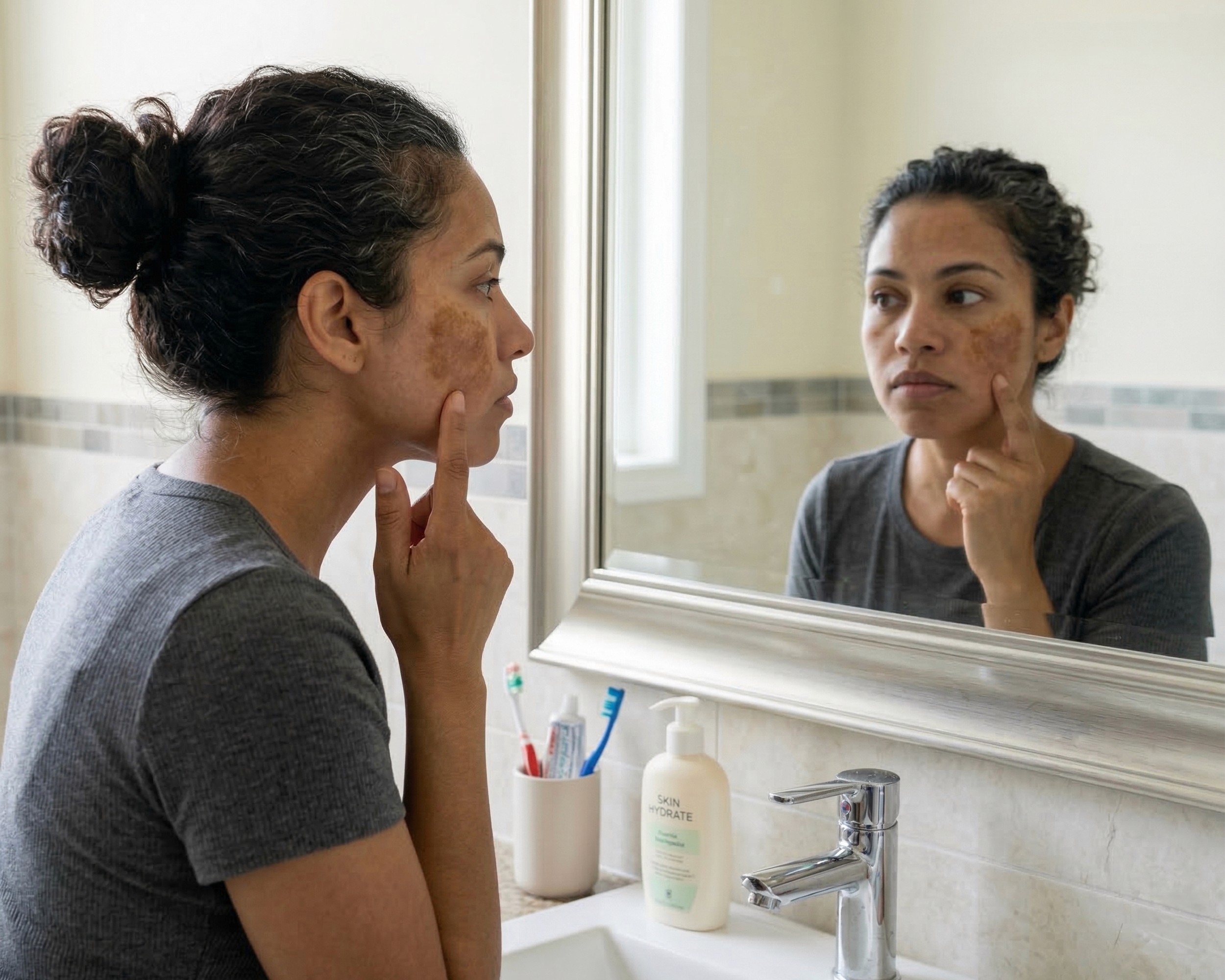
Table of Contents
Table of Contents
Key Takeaways
What Is Melasma?
Why Is Melasma Hard to Treat?
The Long-Time Standard: Hydroquinone 4%
What the New Clinical Trial Found
How Tranexamic Acid + Niacinamide Works
Tranexamic Acid
Niacinamide
Why the Combination Matters
Side Effects of Melasma Treatment
FAQs
Check Your Eligibility
Key Takeaways
What Is Melasma?
Why Is Melasma Hard to Treat?
The Long-Time Standard: Hydroquinone 4%
What the New Clinical Trial Found
How Tranexamic Acid + Niacinamide Works
Tranexamic Acid
Niacinamide
Why the Combination Matters
Side Effects of Melasma Treatment
FAQs
Check Your Eligibility
Key Takeaways
Melasma causes dark patches on the face and is triggered by sun exposure and hormonal changes like pregnancy, menopause, or birth control
A clinical trial found that a cream combining tranexamic acid and niacinamide was as effective as hydroquinone 4% cream at reducing melasma, with fewer side effects
People using hydroquinone experienced side effects six times more often than those using tranexamic acid + niacinamide
Benefits from the combination cream persisted and even improved after treatment ended, while early return of melasma was observed in the hydroquinone group
Sunscreen of at least SPF 30, applied regularly, is an important part of melasma treatment and prevention
What Is Melasma?
If you've noticed dark patches appearing on your cheeks, forehead, or upper lip, and watched them fade in winter only to return stubbornly every summer, you're not imagining it. That pattern is one of the hallmarks of melasma, a skin condition that causes uneven pigmentation on the face. You may have heard melasma called the “mask of pregnancy.”
Melasma affects women far more often than men, and people with medium to darker skin tones tend to be more prone to it. UV light exposure from sun or tanning beds is the biggest trigger, but hormonal shifts, like those from pregnancy, menopause, or birth control pills, can also bring it on or make it worse (2).
Beyond the visible changes, many people find that melasma takes a real toll on their confidence and emotional wellbeing. It's a condition that's more than skin deep, which is exactly why finding treatments that actually work, and that you can stick with, matters so much. (2) Partnering with a provider you trust is important for addressing both the physical and emotional impacts of melasma.
Why Is Melasma Hard to Treat?
The cyclical nature of melasma, fading and flaring with the seasons, hormones, and sun exposure, is part of what makes it so frustrating to manage. Even when a treatment works, stopping it can mean watching the dark patches return.
This is a real limitation of many melasma treatments: they can improve the condition while you’re using them, but results don’t always last after you stop. That’s why researchers have been interested not just in how well a treatment works during a course of therapy, but in what happens after the treatment ends. A recent clinical trial looked at exactly this question, and the results were notable for the specific products and time frame studied.
The Long-Time Standard: Hydroquinone 4%
For years, hydroquinone 4% has long been considered a standard topical treatment for melasma. It works mainly by blocking pigment production through one specific pathway (2).
It’s effective, but it comes with a meaningful side-effect burden. In clinical practice, problems like burning, redness, and allergic reactions are not uncommon. And with long-term use, there’s a risk of a condition called ochronosis, a bluish-black discoloration of the skin that can develop after long term use of hydroquinone. (2) Scientists don’t know exactly why this happens. Because hydroquinone works by blocking a step in pigment production, one commonly accepted theory is that this creates a buildup at the blocked step, which the body turns into other pigments. (6)
For many people, these side effects make it difficult to stay with the treatment long enough to see results.
Hydroquinone remains an important, guideline-supported treatment when used appropriately under medical supervision.
What the New Clinical Trial Found
A randomized, double-blind clinical trial published in Scientific Reports in 2025 tested a compounded cream combining tranexamic acid and niacinamide head-to-head against hydroquinone 4% cream over three months. The findings were notable across three key measures (2):
Effectiveness was equivalent. Both treatments reduced melasma severity by approximately 61–64% over the three-month study period. During the course of the study, researchers found no meaningful difference in how well the two treatments worked.
Side effects were dramatically lower. Only about 3% of people in the tranexamic acid + niacinamide group reported any reaction at all, and those were mild, mainly a small amount of burning. In the hydroquinone group, 18% of participants experienced side effects, including intense burning, redness, allergic reactions, and in some cases ochronosis. Some patients had to discontinue treatment due to these side effects.
Responses after treatment discontinuation. At 1 month after the end of treatment, the results in the combination cream group persisted and, in some cases, improved. Early relapse of melasma was observed in the hydroquinone group.
In short, the combination cream and hydroquinone worked equally well, the combination cream caused fewer side effects, and the combination cream did not lead to relapse. This last result is particularly relevant for those who have experienced the return of melasma after its treatment.
How Tranexamic Acid + Niacinamide Works
Tranexamic acid and niacinamide target melasma from different pathways, essentially attacking the problem from two sides at the same time (2).
Tranexamic Acid
Tranexamic acid is a drug that has been used for decades in medicine, mainly to help control bleeding. It’s FDA-approved for use in heavy menstrual periods or excessive bleeding in patients with hemophilia. It can also be used for rosacea. Recently, researchers discovered it also has effects on skin pigmentation (1).
In the skin, tranexamic acid works by blocking the process that leads to the excessive production of melanin, in this case, the signal that is sent to the cells to produce and retain more melanin after sun exposure (1). When the melanocytes (cells that produce melanin) don’t receive those signals, the process of increased pigmentation doesn’t have a chance to start. (4)
Niacinamide
Niacinamide is a derivative of vitamin B3 widely used in skin care. It acts on a different pathway than tranexamic acid: instead of blocking the production of melanin, it prevents the melanin from being transferred to the cells at the surface of the skin where it is more visible It also acts with anti-inflammatory and antioxidant effects on the skin (2, 5).
Why the Combination Matters
Hydroquinone acts primarily by blocking one step in the process of melanin creation. Melanin is the pigment that gives skin its color. (3) The combination of tranexamic acid and niacinamide acts on melasma from two different pathways at the same time. This double approach could be the reason why, in the clinical trial, this combination worked as well as hydroquinone but with a much gentler safety profile (2).
Side Effects of Melasma Treatment
The side effect numbers in this study are worth a closer look because they tell us a lot about tolerability and long-term adherence.
In the combination cream group:
About 3% of patients experienced a reaction.
The reactions that occurred were mild, a bit of stinging.
No serious adverse reactions were reported in this group.
In the hydroquinone group:
18% of patients experienced side effects.
These included significant stinging, redness, allergic contact dermatitis, and in some cases, ochronosis.
Some patients in this group had to discontinue treatment entirely because their reactions were too severe to continue.
The treatment that works best is one that someone can stick with. If side effects cause someone to stop the treatment, then it likely won’t be as effective.
The researchers also concluded that the long-term use of tranexamic acid + niacinamide, along with the daily application of a sunscreen, may be a promising approach, though longer‑term studies are still needed to confirm durability and safety. Unlike hydroquinone, which may pose more risks at higher doses or with long‑term use, this combination was associated with fewer and milder side effects over the course of the study.
FAQs
Is this combination FDA-approved for melasma?
Compounded medications are not approved or evaluated by the FDA for safety, effectiveness, or quality. But both ingredients are established, and can be prescribed in a custom-compounded cream (made just for you) by a compounding pharmacy. Your provider can help you understand if that’s an option in your case.
How long until results are noticeable?
In the clinical trial, most people started to see improvement in the first month. The best results were seen after the full 3 months of treatment. People who used the tranexamic acid and niacinamide combination cream kept improving even after they stopped using it, while some people who used hydroquinone saw their melasma come back when they stopped the treatment (2). Your individual experience may differ, and your provider can help you set realistic expectations.
Do I still need sunscreen?
Yes! Sunscreen is thought to be an important part of controlling melasma no matter what topical treatment is used. Sun exposure is the underlying driver of melasma, which means topical treatments are less likely to work if you aren’t protecting your skin from the sun. In the clinical trial, all participants were required to apply a broad spectrum sunscreen of at least SPF 30 every 2–3 hours during and after the treatment period (2). Sunscreen is also important for prevention of skin cancer. Your provider can help you understand what the best approach is in your situation.
Can I use this if I'm pregnant or breastfeeding?
People who were pregnant or breastfeeding weren’t included in the study, so there isn’t safety data from this study for those groups (2). Your provider can help you understand what the best options are for you if you are pregnant or breastfeeding.
What is ochronosis, and should I be concerned about it?
Ochronosis is a blue-black skin discoloration that can occur with long-term use of hydroquinone. It was one of the adverse effects that was seen in the hydroquinone group in this study (2). If you’re currently using hydroquinone or are considering it as a treatment option, this is a great question to talk to your provider about.
Does melasma go away?
Melasma is a condition that tends to fade and flare with seasons, hormones, and UV light exposure from sun or tanning beds. In a recent clinical trial, people who used tranexamic acid + niacinamide cream kept improving even after they stopped using it, while some people who used hydroquinone saw their melasma come back. Daily sunscreen application is an important part of managing melasma long-term.
What are the side effects of hydroquinone?
In clinical studies, 18% of patients using hydroquinone experienced side effects including significant stinging, redness, allergic contact dermatitis, and in some cases ochronosis, a bluish-black skin discoloration that can develop with long-term use. Some patients had to stop treatment entirely because their reactions were too severe.
Can melasma get worse during pregnancy?
Hormonal shifts, like those from pregnancy, menopause, or birth control pills, can bring on melasma or make it worse. People who were pregnant or breastfeeding were not included in the clinical trial studying tranexamic acid + niacinamide, so there isn't safety data from this study for those groups. Your provider can help you understand what the best options are for you if you are pregnant or breastfeeding.
Check Your Eligibility
If melasma has been a stubborn issue for you, or if you’ve tried treatments in the past that irritated your skin or didn’t keep working, the new research on tranexamic acid + niacinamide may be worth a conversation with your provider.
Through Mochi Health, providers offer telehealth visits to discuss skin care options and help build a plan that fits your individual needs. If you're interested in learning more, you can check your eligibility here.
Disclaimer: This article is for educational purposes only and should not be considered medical advice. The information provided does not constitute recommendations for treatment. Always consult with your healthcare provider about your specific situation, symptoms, and treatment options.
References
AlJabr A, AlAnazi AMI, AlEtebi RAA. Tranexamic Acid for Hyperpigmentation Disorders: A Literature Review on Efficacy and Safety in Melasma and PIH. J Cosmet Dermatol. 2026;25(2):e70692. doi:10.1111/jocd.70692. PMID: 41601401.
Ghasemiyeh P, Haghighi NF, Dastgheib L, Ranjbar S, Mohammadi-Samani S. Safety and efficacy of niosomal and conventional tranexamic acid/niacinamide vs. hydroquinone creams in melasma: A randomized, double-blind, case-controlled clinical trial. Sci Rep. 2025;15(1):42739. doi:10.1038/s41598-025-26693-8. PMID: 41315336.
Fabian, I. M., Sinnathamby, E. S., Flanagan, C. J., Lindberg, A., Tynes, B., Kelkar, R. A., Varrassi, G., Ahmadzadeh, S., Shekoohi, S., & Kaye, A. D. (2023). Topical Hydroquinone for Hyperpigmentation: A Narrative Review. Cureus, 15(11), e48840. https://doi.org/10.7759/cureus.48840
Gaćina, K., & Krstanović Ćosić, A. (2023). THE USE OF TRANEXAMIC ACID IN DERMATOLOGY. Acta clinica Croatica, 62(2), 368–372. https://doi.org/10.20471/acc.2023.62.02.16
Hakozaki, T., Minwalla, L., Zhuang, J., Chhoa, M., Matsubara, A., Miyamoto, K., Greatens, A., Hillebrand, G. G., Bissett, D. L., & Boissy, R. E. (2002). The effect of niacinamide on reducing cutaneous pigmentation and suppression of melanosome transfer. The British journal of dermatology, 147(1), 20–31. https://doi.org/10.1046/j.1365-2133.2002.04834.x
Bhattar, P. A., Zawar, V. P., Godse, K. V., Patil, S. P., Nadkarni, N. J., & Gautam, M. M. (2015). Exogenous Ochronosis. Indian journal of dermatology, 60(6), 537–543. https://doi.org/10.4103/0019-5154.169122
Key Takeaways
Melasma causes dark patches on the face and is triggered by sun exposure and hormonal changes like pregnancy, menopause, or birth control
A clinical trial found that a cream combining tranexamic acid and niacinamide was as effective as hydroquinone 4% cream at reducing melasma, with fewer side effects
People using hydroquinone experienced side effects six times more often than those using tranexamic acid + niacinamide
Benefits from the combination cream persisted and even improved after treatment ended, while early return of melasma was observed in the hydroquinone group
Sunscreen of at least SPF 30, applied regularly, is an important part of melasma treatment and prevention
What Is Melasma?
If you've noticed dark patches appearing on your cheeks, forehead, or upper lip, and watched them fade in winter only to return stubbornly every summer, you're not imagining it. That pattern is one of the hallmarks of melasma, a skin condition that causes uneven pigmentation on the face. You may have heard melasma called the “mask of pregnancy.”
Melasma affects women far more often than men, and people with medium to darker skin tones tend to be more prone to it. UV light exposure from sun or tanning beds is the biggest trigger, but hormonal shifts, like those from pregnancy, menopause, or birth control pills, can also bring it on or make it worse (2).
Beyond the visible changes, many people find that melasma takes a real toll on their confidence and emotional wellbeing. It's a condition that's more than skin deep, which is exactly why finding treatments that actually work, and that you can stick with, matters so much. (2) Partnering with a provider you trust is important for addressing both the physical and emotional impacts of melasma.
Why Is Melasma Hard to Treat?
The cyclical nature of melasma, fading and flaring with the seasons, hormones, and sun exposure, is part of what makes it so frustrating to manage. Even when a treatment works, stopping it can mean watching the dark patches return.
This is a real limitation of many melasma treatments: they can improve the condition while you’re using them, but results don’t always last after you stop. That’s why researchers have been interested not just in how well a treatment works during a course of therapy, but in what happens after the treatment ends. A recent clinical trial looked at exactly this question, and the results were notable for the specific products and time frame studied.
The Long-Time Standard: Hydroquinone 4%
For years, hydroquinone 4% has long been considered a standard topical treatment for melasma. It works mainly by blocking pigment production through one specific pathway (2).
It’s effective, but it comes with a meaningful side-effect burden. In clinical practice, problems like burning, redness, and allergic reactions are not uncommon. And with long-term use, there’s a risk of a condition called ochronosis, a bluish-black discoloration of the skin that can develop after long term use of hydroquinone. (2) Scientists don’t know exactly why this happens. Because hydroquinone works by blocking a step in pigment production, one commonly accepted theory is that this creates a buildup at the blocked step, which the body turns into other pigments. (6)
For many people, these side effects make it difficult to stay with the treatment long enough to see results.
Hydroquinone remains an important, guideline-supported treatment when used appropriately under medical supervision.
What the New Clinical Trial Found
A randomized, double-blind clinical trial published in Scientific Reports in 2025 tested a compounded cream combining tranexamic acid and niacinamide head-to-head against hydroquinone 4% cream over three months. The findings were notable across three key measures (2):
Effectiveness was equivalent. Both treatments reduced melasma severity by approximately 61–64% over the three-month study period. During the course of the study, researchers found no meaningful difference in how well the two treatments worked.
Side effects were dramatically lower. Only about 3% of people in the tranexamic acid + niacinamide group reported any reaction at all, and those were mild, mainly a small amount of burning. In the hydroquinone group, 18% of participants experienced side effects, including intense burning, redness, allergic reactions, and in some cases ochronosis. Some patients had to discontinue treatment due to these side effects.
Responses after treatment discontinuation. At 1 month after the end of treatment, the results in the combination cream group persisted and, in some cases, improved. Early relapse of melasma was observed in the hydroquinone group.
In short, the combination cream and hydroquinone worked equally well, the combination cream caused fewer side effects, and the combination cream did not lead to relapse. This last result is particularly relevant for those who have experienced the return of melasma after its treatment.
How Tranexamic Acid + Niacinamide Works
Tranexamic acid and niacinamide target melasma from different pathways, essentially attacking the problem from two sides at the same time (2).
Tranexamic Acid
Tranexamic acid is a drug that has been used for decades in medicine, mainly to help control bleeding. It’s FDA-approved for use in heavy menstrual periods or excessive bleeding in patients with hemophilia. It can also be used for rosacea. Recently, researchers discovered it also has effects on skin pigmentation (1).
In the skin, tranexamic acid works by blocking the process that leads to the excessive production of melanin, in this case, the signal that is sent to the cells to produce and retain more melanin after sun exposure (1). When the melanocytes (cells that produce melanin) don’t receive those signals, the process of increased pigmentation doesn’t have a chance to start. (4)
Niacinamide
Niacinamide is a derivative of vitamin B3 widely used in skin care. It acts on a different pathway than tranexamic acid: instead of blocking the production of melanin, it prevents the melanin from being transferred to the cells at the surface of the skin where it is more visible It also acts with anti-inflammatory and antioxidant effects on the skin (2, 5).
Why the Combination Matters
Hydroquinone acts primarily by blocking one step in the process of melanin creation. Melanin is the pigment that gives skin its color. (3) The combination of tranexamic acid and niacinamide acts on melasma from two different pathways at the same time. This double approach could be the reason why, in the clinical trial, this combination worked as well as hydroquinone but with a much gentler safety profile (2).
Side Effects of Melasma Treatment
The side effect numbers in this study are worth a closer look because they tell us a lot about tolerability and long-term adherence.
In the combination cream group:
About 3% of patients experienced a reaction.
The reactions that occurred were mild, a bit of stinging.
No serious adverse reactions were reported in this group.
In the hydroquinone group:
18% of patients experienced side effects.
These included significant stinging, redness, allergic contact dermatitis, and in some cases, ochronosis.
Some patients in this group had to discontinue treatment entirely because their reactions were too severe to continue.
The treatment that works best is one that someone can stick with. If side effects cause someone to stop the treatment, then it likely won’t be as effective.
The researchers also concluded that the long-term use of tranexamic acid + niacinamide, along with the daily application of a sunscreen, may be a promising approach, though longer‑term studies are still needed to confirm durability and safety. Unlike hydroquinone, which may pose more risks at higher doses or with long‑term use, this combination was associated with fewer and milder side effects over the course of the study.
FAQs
Is this combination FDA-approved for melasma?
Compounded medications are not approved or evaluated by the FDA for safety, effectiveness, or quality. But both ingredients are established, and can be prescribed in a custom-compounded cream (made just for you) by a compounding pharmacy. Your provider can help you understand if that’s an option in your case.
How long until results are noticeable?
In the clinical trial, most people started to see improvement in the first month. The best results were seen after the full 3 months of treatment. People who used the tranexamic acid and niacinamide combination cream kept improving even after they stopped using it, while some people who used hydroquinone saw their melasma come back when they stopped the treatment (2). Your individual experience may differ, and your provider can help you set realistic expectations.
Do I still need sunscreen?
Yes! Sunscreen is thought to be an important part of controlling melasma no matter what topical treatment is used. Sun exposure is the underlying driver of melasma, which means topical treatments are less likely to work if you aren’t protecting your skin from the sun. In the clinical trial, all participants were required to apply a broad spectrum sunscreen of at least SPF 30 every 2–3 hours during and after the treatment period (2). Sunscreen is also important for prevention of skin cancer. Your provider can help you understand what the best approach is in your situation.
Can I use this if I'm pregnant or breastfeeding?
People who were pregnant or breastfeeding weren’t included in the study, so there isn’t safety data from this study for those groups (2). Your provider can help you understand what the best options are for you if you are pregnant or breastfeeding.
What is ochronosis, and should I be concerned about it?
Ochronosis is a blue-black skin discoloration that can occur with long-term use of hydroquinone. It was one of the adverse effects that was seen in the hydroquinone group in this study (2). If you’re currently using hydroquinone or are considering it as a treatment option, this is a great question to talk to your provider about.
Does melasma go away?
Melasma is a condition that tends to fade and flare with seasons, hormones, and UV light exposure from sun or tanning beds. In a recent clinical trial, people who used tranexamic acid + niacinamide cream kept improving even after they stopped using it, while some people who used hydroquinone saw their melasma come back. Daily sunscreen application is an important part of managing melasma long-term.
What are the side effects of hydroquinone?
In clinical studies, 18% of patients using hydroquinone experienced side effects including significant stinging, redness, allergic contact dermatitis, and in some cases ochronosis, a bluish-black skin discoloration that can develop with long-term use. Some patients had to stop treatment entirely because their reactions were too severe.
Can melasma get worse during pregnancy?
Hormonal shifts, like those from pregnancy, menopause, or birth control pills, can bring on melasma or make it worse. People who were pregnant or breastfeeding were not included in the clinical trial studying tranexamic acid + niacinamide, so there isn't safety data from this study for those groups. Your provider can help you understand what the best options are for you if you are pregnant or breastfeeding.
Check Your Eligibility
If melasma has been a stubborn issue for you, or if you’ve tried treatments in the past that irritated your skin or didn’t keep working, the new research on tranexamic acid + niacinamide may be worth a conversation with your provider.
Through Mochi Health, providers offer telehealth visits to discuss skin care options and help build a plan that fits your individual needs. If you're interested in learning more, you can check your eligibility here.
Disclaimer: This article is for educational purposes only and should not be considered medical advice. The information provided does not constitute recommendations for treatment. Always consult with your healthcare provider about your specific situation, symptoms, and treatment options.
References
AlJabr A, AlAnazi AMI, AlEtebi RAA. Tranexamic Acid for Hyperpigmentation Disorders: A Literature Review on Efficacy and Safety in Melasma and PIH. J Cosmet Dermatol. 2026;25(2):e70692. doi:10.1111/jocd.70692. PMID: 41601401.
Ghasemiyeh P, Haghighi NF, Dastgheib L, Ranjbar S, Mohammadi-Samani S. Safety and efficacy of niosomal and conventional tranexamic acid/niacinamide vs. hydroquinone creams in melasma: A randomized, double-blind, case-controlled clinical trial. Sci Rep. 2025;15(1):42739. doi:10.1038/s41598-025-26693-8. PMID: 41315336.
Fabian, I. M., Sinnathamby, E. S., Flanagan, C. J., Lindberg, A., Tynes, B., Kelkar, R. A., Varrassi, G., Ahmadzadeh, S., Shekoohi, S., & Kaye, A. D. (2023). Topical Hydroquinone for Hyperpigmentation: A Narrative Review. Cureus, 15(11), e48840. https://doi.org/10.7759/cureus.48840
Gaćina, K., & Krstanović Ćosić, A. (2023). THE USE OF TRANEXAMIC ACID IN DERMATOLOGY. Acta clinica Croatica, 62(2), 368–372. https://doi.org/10.20471/acc.2023.62.02.16
Hakozaki, T., Minwalla, L., Zhuang, J., Chhoa, M., Matsubara, A., Miyamoto, K., Greatens, A., Hillebrand, G. G., Bissett, D. L., & Boissy, R. E. (2002). The effect of niacinamide on reducing cutaneous pigmentation and suppression of melanosome transfer. The British journal of dermatology, 147(1), 20–31. https://doi.org/10.1046/j.1365-2133.2002.04834.x
Bhattar, P. A., Zawar, V. P., Godse, K. V., Patil, S. P., Nadkarni, N. J., & Gautam, M. M. (2015). Exogenous Ochronosis. Indian journal of dermatology, 60(6), 537–543. https://doi.org/10.4103/0019-5154.169122
Read next














Ready to transform your health?
Unlock access to expert guidance and a weight care plan crafted just for you.


Personalized care designed for you.


© 2026 Mochi Health
All professional medical services are provided by licensed physicians and clinicians affiliated with independently owned and operated professional practices. Mochi Health Corp. provides administrative and technology services to affiliated medical practices it supports, and does not provide any professional medical services itself.

Personalized care designed for you.
© 2026 Mochi Health
All professional medical services are provided by licensed physicians and clinicians affiliated with independently owned and operated professional practices. Mochi Health Corp. provides administrative and technology services to affiliated medical practices it supports, and does not provide any professional medical services itself.
Personalized care designed for you.
© 2026 Mochi Health
All professional medical services are provided by licensed physicians and clinicians affiliated with independently owned and operated professional practices. Mochi Health Corp. provides administrative and technology services to affiliated medical practices it supports, and does not provide any professional medical services itself.