All articles
Does Jardiance Cause Weight Loss? Benefits, Risks, and More
Reading time:
5 min

Weight loss
Get expert guidance and a personalized care plan designed around you.
Does Jardiance Lead To Weight Loss?
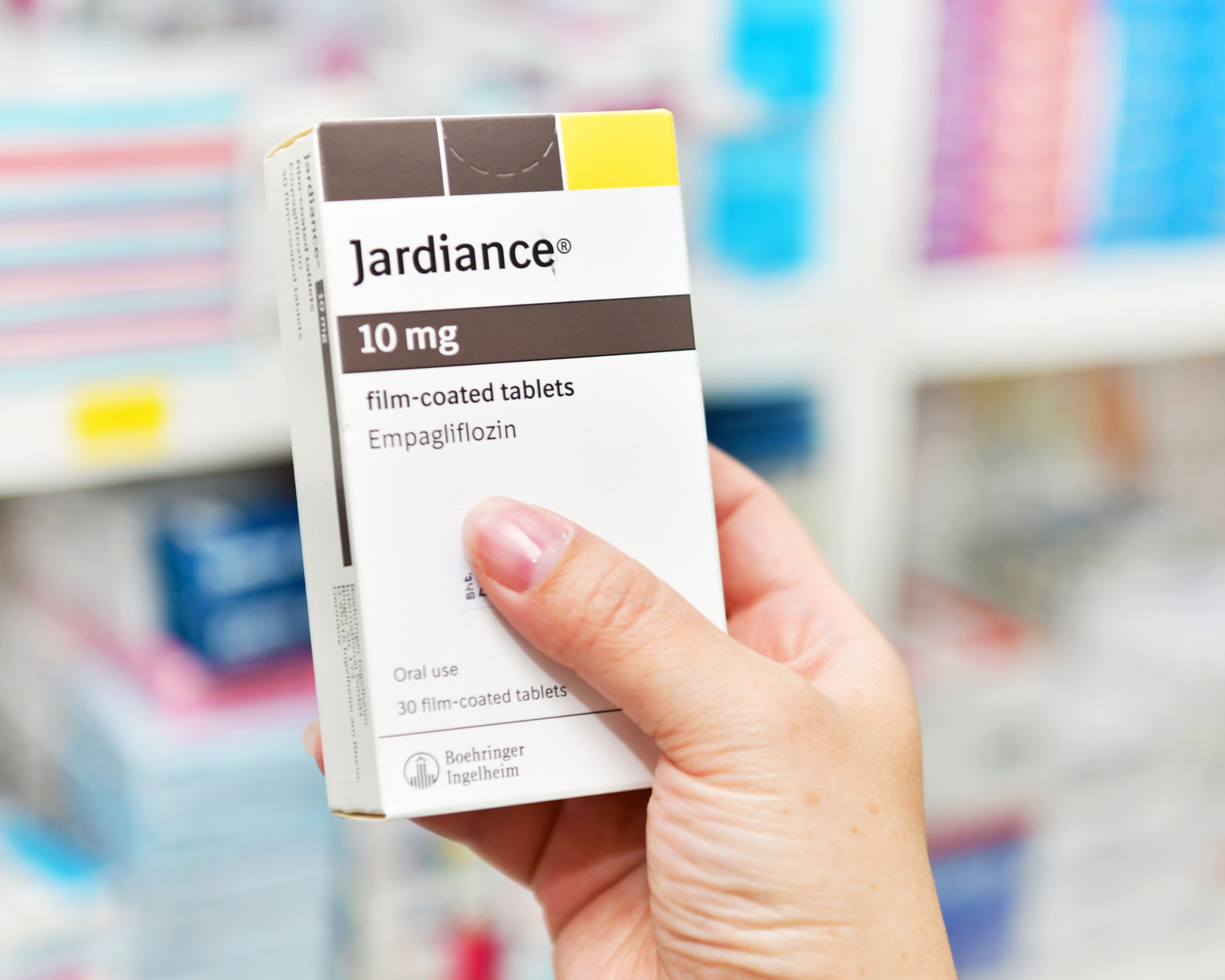
While Jardiance is not FDA-approved for treating weight loss, there are clinical studies that show its potential in aiding weight reduction. This can be especially useful for patients with Type 2 diabetes who are also overweight or obese.
A clinical study revealed that patients taking Jardiance typically experienced weight loss ranging from 1.4kg (3.1 lbs.) to 2.1kg (4.6 lbs.) on average (4). This works because glucose contains 4 calories per gram. As Jardiance helps the body excrete glucose through urine, it also results in the loss of calories, potentially leading to weight reduction.
Who Can Take Jardiance?
Jardiance is typically prescribed for individuals with type 2 diabetes to help manage blood sugar levels effectively. Additionally, it's used for those diagnosed with heart failure, offering benefits such as lowering blood pressure and protecting the heart. These conditions often result in elevated average blood glucose levels (HbA1c) and weakened heart function. While Jardiance isn't FDA-approved for weight management, its multifaceted benefits make it a valuable tool in comprehensive diabetes and heart health management (3).
Other Medications That Stimulate Weight Loss
If you’re struggling with being overweight or obese and seeking pharmaceutical therapy, there are medications that are more effective for weight management that are worth exploring. For instance, medications like Zepbound®, Wegovy®, or Ozempic®, originally designed to treat diabetes, have shown potent effects on weight reduction. Additionally, there are other options to consider.
GLP-1 Medications
This category includes various synthetic GLP-1 receptor agonists that mimic the body’s natural hormone, helping to regulate appetite, blood sugar levels, and stomach emptying. This includes medications that use Semaglutide, like Ozempic® and Wegovy®, and Tirzepatide, like Zepbound® and Mounjaro®. Some are FDA-approved for weight loss, while others are used off-label. They’re typically given as injections.
Topiramate
By altering GABA and Glutamate channels in the brain, topiramate can effectively suppress cravings and appetite. It is not FDA-approved for weight loss, but is often used off-label and is usually taken in pill form.
Bupropion
Working as a neurotransmitter reuptake inhibitor for norepinephrine and dopamine, bupropion increases their concentrations in the brain, thereby altering hunger and mood. It is used off-label for weight loss and is usually taken in pill form.
Naltrexone
Acting as a mu-receptor antagonist, naltrexone suppresses appetite and cravings by inhibiting the effects on the hypothalamic-pituitary-adrenal axis. It’s generally administered as an oral pill and used off-label for weight management.
Orlistat
This medication functions as a lipase inhibitor, preventing the breakdown of fats in the intestines and resulting in their excretion in stool. It is FDA-approved for the treatment of obesity and is taken as a pill.
More on Medications For Weight Loss
If you're intrigued by the potential benefits of medications like GLP-1 agonists and others for weight management, take the next step towards exploring your options. Click here to find out if you’re eligible for a medication-assisted weight loss program at Mochi Health. Our knowledgeable providers specialize in obesity medicine and will craft the best treatment plan to fit your needs and goals. Don't hesitate to take control of your health and start your path toward a healthier you.
References:
Liu, X.-Y., Zhang, N., Chen, R., Zhao, J.-G., & Yu, P. (2015). Efficacy and safety of sodium–glucose cotransporter 2 inhibitors in type 2 diabetes: a meta-analysis of randomized controlled trials for 1 to 2years. Journal of Diabetes and Its Complications, 29(8), 1295–1303. https://doi.org/10.1016/j.jdiacomp.2015.07.011
Zou, C.-Y., Liu, X.-K., Sang, Y.-Q., Wang, B., & Liang, J. (2019). Effects of SGLT2 inhibitors on cardiovascular outcomes and mortality in type 2 diabetes: A meta-analysis. Medicine (Baltimore), 98(49), e18245–e18245. https://doi.org/10.1097/MD.0000000000018245
Clar, C., Gill, J. A., Court, R., & Waugh, N. (2012). Systematic review of SGLT2 receptor inhibitors in dual or triple therapy in type 2 diabetes. BMJ Open, 2(5), e001007-. https://doi.org/10.1136/bmjopen-2012-001007
Neeland, I. J., McGuire, D. K., Chilton, R., Crowe, S., Lund, S. S., Woerle, H. J., Broedl, U. C., & Johansen, O. E. (2016, March). Empagliflozin reduces body weight and indices of adipose distribution in patients with type 2 diabetes mellitus. Diabetes & vascular disease research. https://www.ncbi.nlm.nih.gov/pmc/articles/PMC4768401/
Share this post
Weight loss
More articles