All articles
Hydroquinone Cream: How It Works for Dark Spots and Melasma
Reading time:
8 min

Skincare

Get expert guidance and a personalized care plan designed around you.
Why hydroquinone is often combined with other ingredients
Hydroquinone is often paired with ingredients that target pigment in different ways. A Cochrane review of 20 melasma trials (6) found that a triple-combination cream of hydroquinone, tretinoin, and a corticosteroid was more effective at lightening melasma than hydroquinone alone or any dual combination.
Tretinoin is a prescription retinoid. In the same Cochrane review, tretinoin reduced melasma severity compared with placebo on objective measures (6). You can read more in our guide to using hydroquinone and tretinoin together.
Kojic acid also blocks tyrosinase, by binding the copper in the enzyme's active site (7). In a randomized study of people with melasma (8), kojic acid combined with hydroquinone outperformed the other combinations tested.
Niacinamide works on a different step. Instead of blocking melanin production, it reduces the transfer of pigment to surface skin cells (9), and in clinical testing it lowered hyperpigmentation compared with a plain moisturizer after 4 weeks.
Because each of these ingredients targets pigment in a different way, providers often prescribe them together in a single compounded cream. Compounded formulas can also use hydroquinone strengths above the 4% in the FDA-approved product, which is why a licensed provider should review your health history before prescribing one and check in on your progress. Compounded medications are not FDA-approved.
How long does hydroquinone take to work?
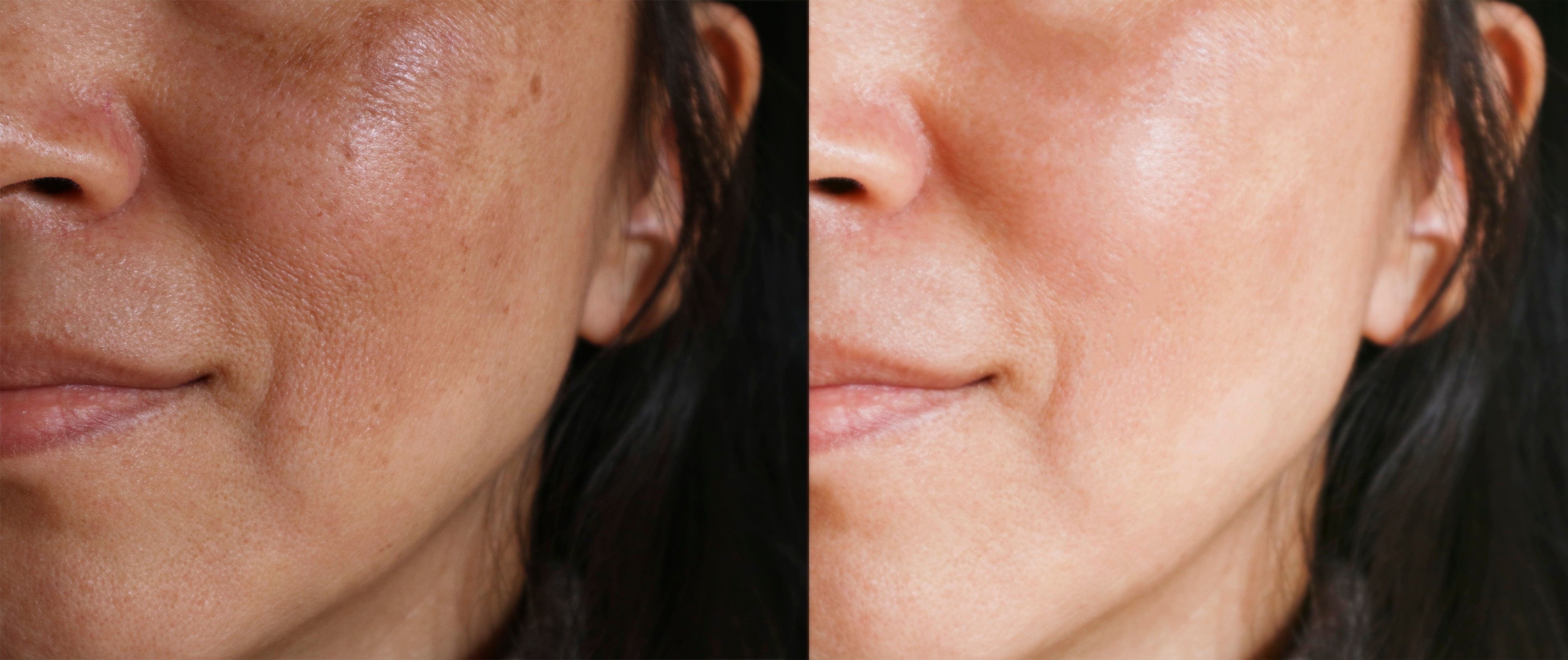
Most people need several weeks of consistent use before dark spots look lighter. In a multicenter trial of the FDA-approved triple-combination cream (10), 77% of people with moderate to severe facial melasma had complete or near-complete clearing by week 8. Results vary from person to person.
Hydroquinone also tends to work faster than some gentler brighteners. A 2023 review (1) noted that 4% hydroquinone cream improved hyperpigmentation faster than 0.75% kojic acid cream. Whatever you use, skipping sunscreen can undo your progress, since sun exposure keeps triggering new pigment.
Is hydroquinone safe?
Hydroquinone is meant for short courses under a provider's care, not open-ended use, and its most common side effects are mild. They include irritant or allergic contact dermatitis (1), which can show up as redness, burning, or itching. Less often, it can cause hypopigmentation (patches lighter than your natural skin) or new dark marks from irritation.
Exogenous ochronosis
Exogenous ochronosis is a rare side effect that causes blue-black or gray-brown discoloration (1) in sun-exposed areas, sometimes with small bumps. The same review concluded that concentrations above 4% and treatment courses longer than 3 months may be associated with new-onset ochronosis (1). This is why providers prescribe hydroquinone for a limited time (usually 2 to 3 months) and watch for changes, especially with higher-strength formulas.
Hydroquinone and pregnancy
Hydroquinone is best avoided if you are pregnant or trying to get pregnant. An estimated 35% to 45% of topical hydroquinone is absorbed into the body (11), and very little research has looked at its use in pregnancy. Topical retinoids like tretinoin are also generally avoided during pregnancy as a precaution (12). Tell your provider if you are pregnant, breastfeeding, or planning a pregnancy.
How to use hydroquinone cream
Use hydroquinone cream exactly as your provider directs, which usually means a thin layer on the dark spots only, not your whole face. Pair it with daily sun protection, since the American Academy of Dermatology (2) notes that sunlight triggers melasma.
Apply it only to the spots or patches your provider is treating.
Wear sunscreen every day. The AAD recommends a tinted sunscreen with iron oxide and SPF 30 or higher (2), applied 15 minutes before going outside and reapplied at least every 2 hours.
Add shade and a wide-brimmed hat when you are outdoors.
Expect some mild irritation at first. Tell your provider if redness or burning doesn't settle, or if you notice spots turning darker or blue-gray.
Keep sun protection going after your spots fade, since melasma can come back.
How to make hydroquinone work faster
Consistency and sun protection make the biggest difference. Use your cream every day as directed, wear a tinted SPF 30 or higher sunscreen every morning, and ask your provider about a combination formula. In a Cochrane review (6), hydroquinone combined with tretinoin and a corticosteroid lightened melasma more than hydroquinone alone.
Can you buy hydroquinone over the counter?
No. Hydroquinone is no longer legal to sell without a prescription in the US, and the FDA says there are no FDA-approved or legally marketed over-the-counter skin lightening products (3) that contain it. The FDA has also warned that some skin products sold online contain mercury and/or hydroquinone (13), so buying from unverified sellers carries real risk.
Over-the-counter dark spot creams usually rely on ingredients like niacinamide, kojic acid, or azelaic acid instead. These can help some people, but they are not the same as prescription hydroquinone. If you also deal with breakouts, our guide to azelaic acid and tretinoin covers how those ingredients compare.
Where to get prescription hydroquinone cream
You can get prescription hydroquinone cream online through a telehealth provider. With Mochi, you share your skin and health history, a licensed provider reviews it, and if hydroquinone is a fit, your prescription is filled and delivered to your door.
The bottom line
If dark spots or melasma have stuck around no matter what you try, prescription hydroquinone cream goes after the source: the enzyme that makes excess pigment. Paired with tretinoin, kojic acid, niacinamide, and daily sunscreen, it can visibly fade spots in a matter of weeks. Because it is prescription only and meant for time-limited use, it works best with a provider guiding your routine and watching for side effects. It is not recommended during pregnancy.
Mochi can connect you to a board-certified provider licensed in your state who can review your skin and health history and decide if prescription hydroquinone is right for you. See if you're eligible.
Frequently asked questions (FAQs)
Does hydroquinone cream work?
Yes. Studies show it works well for melasma and dark spots when it is used consistently and paired with daily sunscreen. In a multicenter trial (10), 77% of people using a hydroquinone triple-combination cream had complete or near-complete clearing of their melasma by week 8. Results vary, and your provider can adjust your formula if your spots are slow to respond.
Does hydroquinone bleach your skin?
Hydroquinone is sometimes called a bleaching cream, but it does not bleach skin like household bleach. It slows melanin production (5) in the area you treat. Using it on normal skin or over large areas can cause uneven, lighter patches, so it should only go on the spots your provider is treating.
How long can you use hydroquinone?
Hydroquinone is meant for time-limited courses, not year-round use. Research links concentrations above 4% and courses longer than 3 months (1) to a higher risk of exogenous ochronosis, so your provider may switch you to a non-hydroquinone treatment after 2 to 3 months to reduce risk of harm and to maintain results.
Can you use hydroquinone with tretinoin?
Yes, and they are often combined. A Cochrane review (6) found that a triple-combination cream with hydroquinone and tretinoin lightened melasma more than hydroquinone alone. Tretinoin can cause dryness, peeling, and stinging (14), especially in the first few weeks, so follow your provider's directions on how often to apply.
What is the best treatment for melasma?
No single treatment works best for everyone. Daily sun protection (2) is the foundation, and triple-combination cream with hydroquinone have been found to be more effective than hydroquinone alone or dual combinations. A provider can help you choose based on your skin type and health history.
References
Fabian IM, et al. Topical hydroquinone for hyperpigmentation: a narrative review. Cureus. 2023. https://pmc.ncbi.nlm.nih.gov/articles/PMC10723018/
American Academy of Dermatology. Melasma: self-care. https://www.aad.org/public/diseases/a-z/melasma-self-care
U.S. Food and Drug Administration. FDA works to protect consumers from potentially harmful OTC skin lightening products. https://www.fda.gov/drugs/drug-safety-communications/fda-works-protect-consumers-potentially-harmful-otc-skin-lightening-products
U.S. Food and Drug Administration. Skin product safety (Skin Facts! What you need to know about skin lightening products). https://www.fda.gov/consumers/skin-facts-what-you-need-know-about-skin-lightening-products/skin-product-safety
Hydroquinone. StatPearls. NCBI Bookshelf. https://www.ncbi.nlm.nih.gov/books/NBK539693/
Jutley GS, et al. Systematic review of randomized controlled trials on interventions for melasma: an abridged Cochrane review. J Am Acad Dermatol. 2014. https://pubmed.ncbi.nlm.nih.gov/24438951/
Zolghadri S, et al. A comprehensive review on tyrosinase inhibitors. J Enzyme Inhib Med Chem. 2019. https://pmc.ncbi.nlm.nih.gov/articles/PMC6327992/
Deo KS, et al. Kojic acid vis-a-vis its combinations with hydroquinone and betamethasone valerate in melasma: a randomized, single blind, comparative study of efficacy and safety. Indian J Dermatol. 2013. https://pmc.ncbi.nlm.nih.gov/articles/PMC3726874/
Hakozaki T, et al. The effect of niacinamide on reducing cutaneous pigmentation and suppression of melanosome transfer. Br J Dermatol. 2002. https://pubmed.ncbi.nlm.nih.gov/12100180/
Taylor SC, et al. Efficacy and safety of a new triple-combination agent for the treatment of facial melasma. Cutis. 2003. https://pubmed.ncbi.nlm.nih.gov/12889718/
Bozzo P, et al. Safety of skin care products during pregnancy. Can Fam Physician. 2011. https://pmc.ncbi.nlm.nih.gov/articles/PMC3114665/
Putra IB, et al. Skin changes and safety profile of topical products during pregnancy. J Clin Aesthet Dermatol. 2022. https://pmc.ncbi.nlm.nih.gov/articles/PMC8884185/
U.S. Food and Drug Administration. FDA warns consumers of skin products containing mercury and/or hydroquinone. https://www.fda.gov/consumers/health-fraud-scams/fda-warns-consumers-skin-products-containing-mercury-andor-hydroquinone
Tretinoin. StatPearls. NCBI Bookshelf. https://www.ncbi.nlm.nih.gov/books/NBK557478/
This article is for informational purposes only and does not constitute medical advice. Always consult with a qualified healthcare provider before starting, stopping, or changing any medication or treatment plan. Hydroquinone cream, including compounded hydroquinone combination creams and FDA-approved triple-combination cream, requires a written prescription from a licensed provider. Speak with a provider to determine if a hydroquinone cream is appropriate for you. The only FDA-approved hydroquinone product is a prescription triple-combination cream for the short-term treatment of moderate to severe facial melasma, and tretinoin is FDA approved for acne. Compounded hydroquinone, kojic acid, niacinamide, azelaic acid, and tretinoin creams are not FDA approved, and their use for dark spots and melasma is off-label. Compounded medications are not approved or evaluated by the FDA for safety, effectiveness, or quality. Individual results are not guaranteed and may vary from person to person. All professional medical services are provided by licensed physicians and clinicians affiliated with independently owned and operated professional practices. Mochi Health Corp. provides administrative and technology services to affiliated medical practices it supports, and does not provide any professional medical services itself.
Share this post
Skincare
More articles